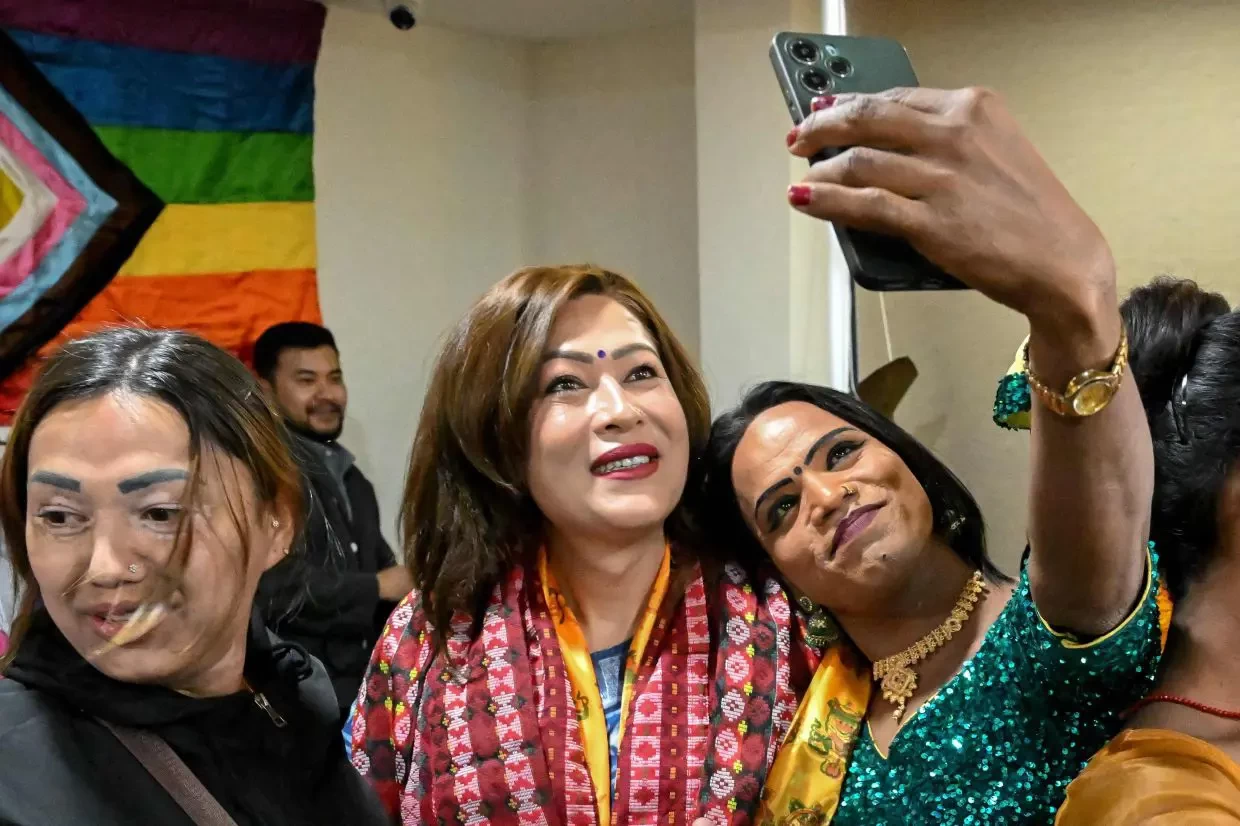
Nepal has marked a historic step in inclusive governance with the induction of Bhumika Shrestha as the country’s first transgender member of Parliament, a milestone for gender representation in South Asia.
Shrestha’s entry into the legislature is being widely seen as a significant moment for gender minorities in the region, where transgender participation in formal politics has remained limited.
The development builds on Nepal’s progressive legal framework on gender identity. In 2007, the Supreme Court of Nepal formally recognised the rights of sexual and gender minorities and directed the government to provide legal protections, including recognition of a “third gender” category. This recognition was later incorporated into official documents such as citizenship certificates and passports, allowing individuals to identify beyond the male-female binary.
Shrestha’s inclusion in Parliament extends these legal protections into the political arena, signalling a move toward ensuring representation of gender minorities in decision-making institutions.
“I am very excited but also feel the responsibility on my shoulders,” Shrestha, an LGBTQ rights advocate, said, adding that while constitutional provisions exist, they have yet to fully translate into laws and policies. “Our community expects me to raise these issues in Parliament.”
Shrestha will be part of the 275-member House of Representatives elected on March 5, in what was the first election since anti-corruption protests led to the fall of the government in September last year.
Rights groups and observers have described the development as a major step for visibility and political participation, highlighting the growing role of marginalised communities in Nepal’s democratic processes.
However, challenges remain. Despite legal recognition, transgender individuals in Nepal continue to face social stigma, discrimination in employment, and barriers in accessing healthcare and public services. Activists stress that while representation in Parliament is a crucial step, broader structural reforms are necessary to ensure equality in everyday life.
The development has drawn regional attention, reinforcing Nepal’s position as one of South Asia’s more progressive countries on gender diversity. As the country moves forward, Shrestha’s presence in Parliament is expected to contribute to ongoing debates on rights, inclusion, and social justice, while setting a precedent for greater political participation among gender minorities.