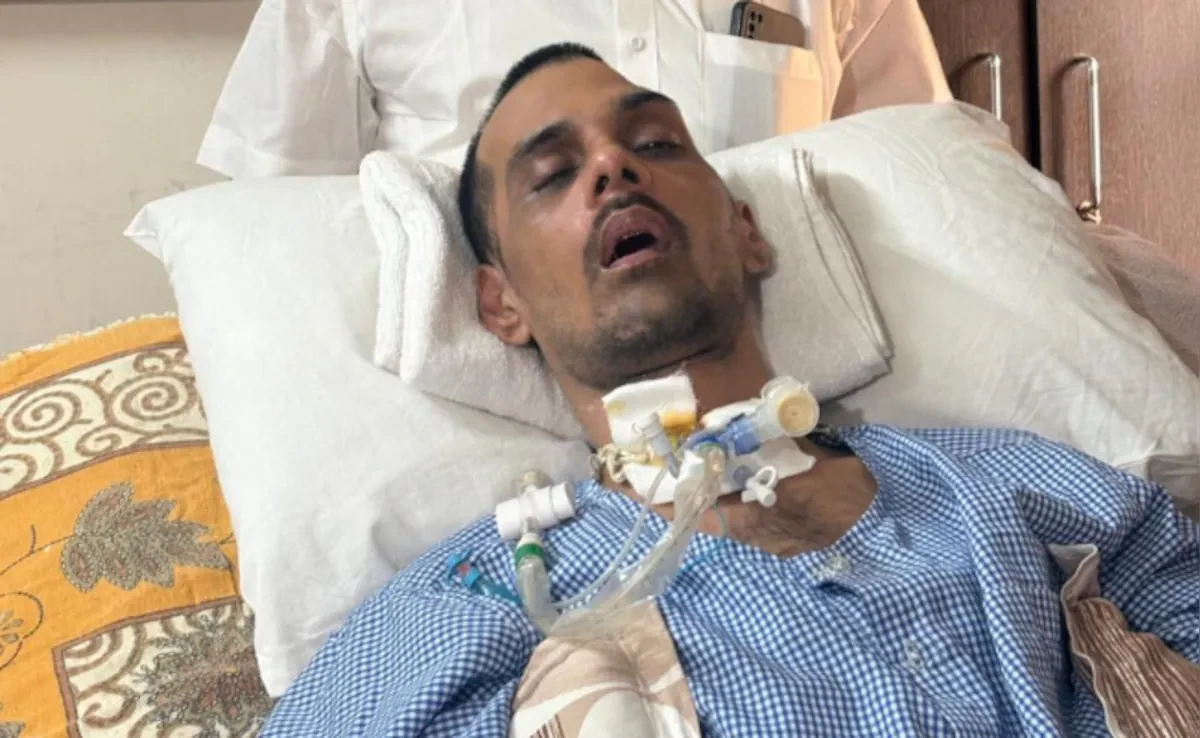
A distressing case similar to that of Harish Rana is unfolding in Mumbai, where 35-year-old Anand Dixit has been in a vegetative state for over two years following a life-altering accident.
Harish Rana, who suffered severe brain injuries after a fall from the fourth floor in 2013, remained on prolonged life support, dependent on medical systems for both breathing and nutrition. After years of treatment and emotional hardship, his parents moved the Supreme Court of India, seeking permission for euthanasia.
A similarly painful journey now confronts Anand Dixit’s family. On December 29, 2023, in Gorakhpur, Anand met with a serious accident while riding a newly purchased scooter, leaving him critically injured.
For more than two and a half years, Anand has remained in a persistent vegetative state with no signs of recovery, sustained entirely through life-support systems. He is dependent on machines for both respiration and feeding.
His caregiver, Arjun Prajapati, has spent the last 18 months constantly by his side, waiting for any sign of response—yet none has come.
The prolonged treatment has pushed the family into severe financial distress, with expenses exceeding ₹4 crore after exhausting their savings and assets. Compounding their hardship, their home in Mumbai was demolished by the Brihanmumbai Municipal Corporation during Anand’s treatment, forcing them to move into rented accommodation.
For the family, Anand’s condition is not just a personal tragedy but a reflection of a larger systemic challenge—where prolonged medical care, limited insurance coverage, and legal complexities turn such cases into enduring ordeals, affecting not just the patient but the entire family.