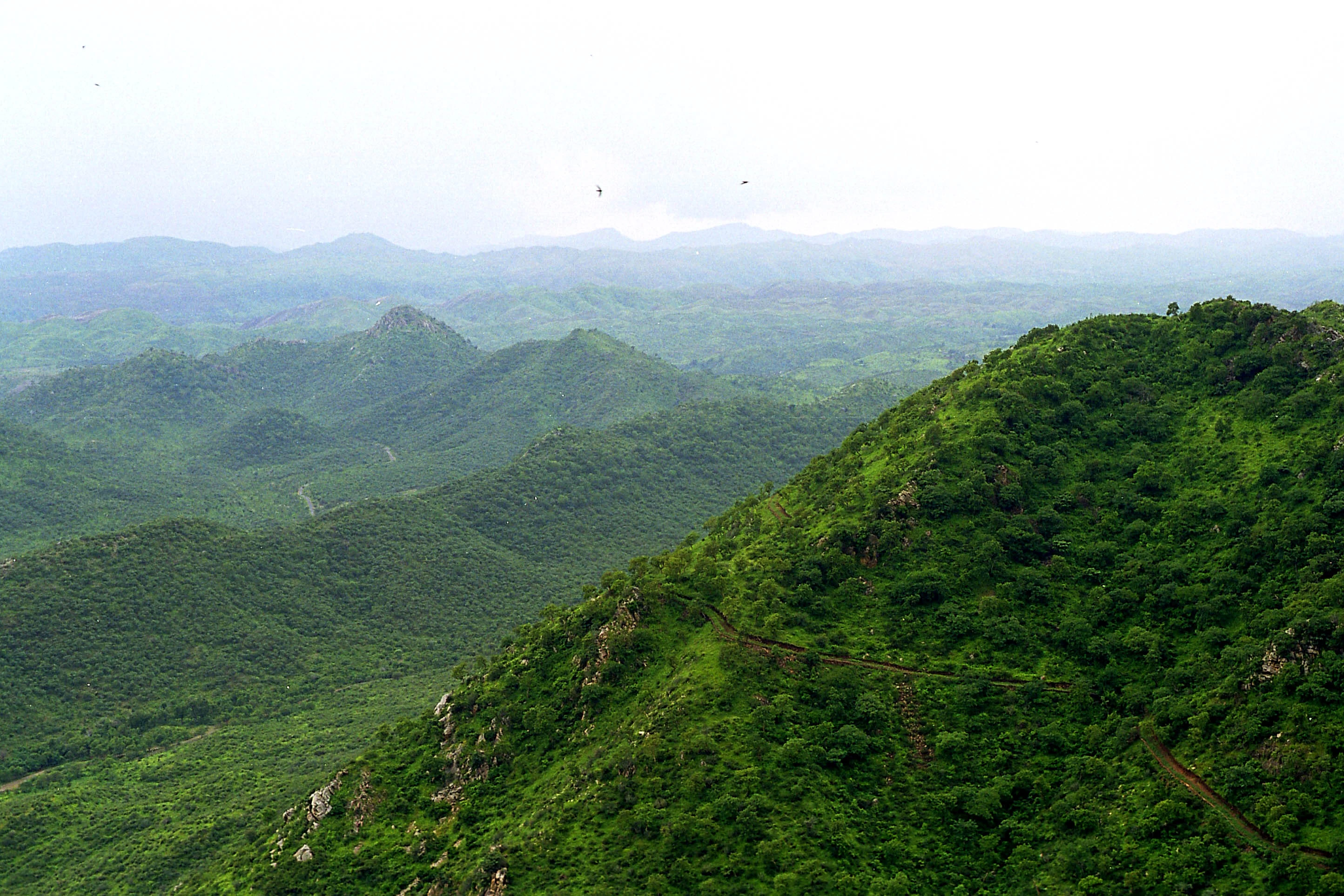
The Supreme Court on Monday stayed its own order that narrowed the definition of the Aravalli mountain range, deciding to reopen and comprehensively re-examine how the ecologically fragile hills should be identified and regulated, particularly in relation to mining.
A vacation bench headed by Chief Justice Surya Kant, along with Justices J.K. Maheshwari and Augustine George Masih, ordered that both the recommendations of a court-appointed expert committee and the subsequent directions issued by the court be kept in abeyance until further consideration. “We deem it necessary that the recommendations of the committee and the directions of this court be kept in abeyance,” the Chief Justice said, indicating that the earlier ruling required reconsideration in light of emerging concerns.
The bench also proposed the constitution of a fresh, high-powered expert committee to reassess the definition of the Aravalli range and examine whether the earlier, elevation-based approach adequately protected the region’s ecological continuity. Notices were issued to the Union government and the four states through which the Aravallis run, Rajasthan, Gujarat, Delhi and Haryana, with the matter posted for further hearing on January 21.
The court’s intervention followed mounting criticism from environmentalists and scientists, who argued that the November ruling, which defined the Aravallis as landforms rising at least 100 metres above the surrounding terrain, risked excluding large swathes of the ancient range and opening them up to unregulated mining.
Taking suo motu cognisance of the controversy, the bench observed that several aspects of the earlier decision appeared to be “misconstrued” and warranted clarification. “We feel that a fair, impartial and independent expert opinion must be considered prior to implementation,” the Chief Justice said.
He added that the court needed to determine whether the revised definition had “broadened the scope of non-Aravalli areas”, thereby facilitating the continuation of mining activity that could compromise the ecological integrity of the range. “We propose to constitute a high-powered committee to undertake a detailed assessment of the report, including identification of areas that may be excluded from the Aravalli region and whether such exclusion risks environmental degradation,” the Chief Justice said.
During the hearing, Solicitor General Tushar Mehta, appearing for the Union government, argued that the November judgment had accepted a comprehensive plan for sustainable mining and that the Centre had committed to public consultations before any plan was finalised. He said there were “several misconceptions” surrounding the court’s earlier ruling.
The bench, however, raised concerns about the structural and ecological implications of a purely height-based definition. It questioned how mining would be regulated in gaps between two qualifying hill formations and whether such an approach fragmented what was, in reality, a continuous geological system. “For instance, if there are two areas of 100 metres and above, what about a gap of 700 metres between them?” the bench asked, warning against regulatory blind spots that could be exploited.
The interim stay is expected to halt the ongoing exercise initiated by the Union environment ministry and state governments to map Aravalli areas strictly on the basis of the 100-metre criterion. That delineation process was intended to form the foundation for a Management Plan for Sustainable Mining.
Earlier, in November, the Supreme Court had directed the Centre to prepare a comprehensive plan before permitting any new mining activity in the region. On Christmas Day, the Union government announced a complete ban on new mining leases in the Aravallis, while allowing existing mines to operate under strict environmental safeguards and in compliance with court orders.
Stretching over nearly 700 kilometres from eastern Gujarat to Delhi through Rajasthan and Haryana, the Aravalli range is one of the world’s oldest fold mountain systems, dating back nearly two billion years. It plays a crucial role in preventing desertification, aiding groundwater recharge and sustaining biodiversity in an otherwise arid landscape.