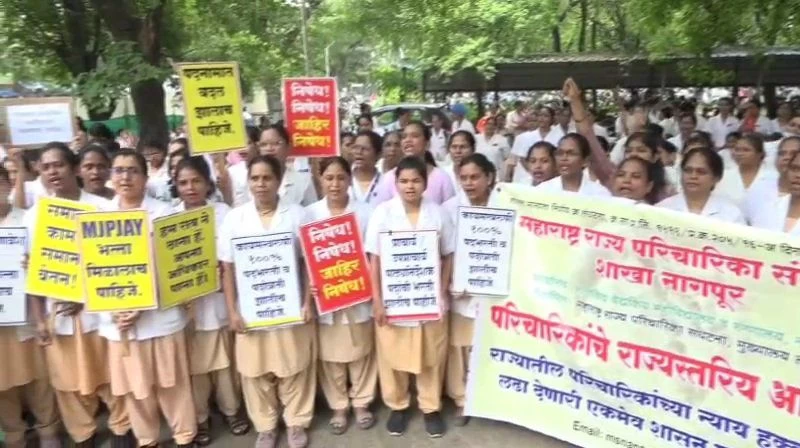
More than 30,000 nurses working in government hospitals across Maharashtra have launched an indefinite strike from July 18, severely affecting healthcare services in state-run hospitals, primary health centres, and other medical institutions. The strike, called by the Maharashtra State Nurses Association (MSNA), is a protest against unresolved salary discrepancies and long-pending service-related demands.
According to the association, the implementation of the 7th Pay Commission failed to address several anomalies in the pay structure of nursing staff. Frustrated by the state government’s inaction, the MSNA decided to intensify its agitation by completely withdrawing nursing services.
Before resorting to a full strike, the nurses had staged protests on July 15 and 16 at Azad Maidan in Mumbai and observed a one-day token strike on July 17.
MSNA leaders stated that government nurses have been burdened with increasing responsibilities over the years without receiving fair compensation or timely promotions. They alleged that multiple representations to government authorities have gone unanswered, compelling them to resort to an indefinite strike.
The key demands raised by the association include the rectification of pay scale discrepancies, implementation of ₹5400 grade pay and uniform allowance in line with Central Government benefits, and revision of the promotion policy to ensure timely career progression. The nurses are also demanding 100% posting and promotion opportunities under the Medical Education Department and the immediate establishment of an independent Nursing Directorate.
In addition, they have sought a resolution to issues faced by GNM and B.Sc Nursing students, including the provision of scholarships, and have urged the state to fill all vacant nursing posts on an urgent basis. They have also called for immediate implementation of already-approved government decisions.
The strike has placed a significant burden on the public healthcare system, particularly in rural and semi-urban regions where government nurses play a critical role in service delivery. Several hospitals have reported disruptions in patient care, outpatient services, and ward management.
Responding to the ongoing crisis, Prakash Abitkar, Minister of Public Health and Family Welfare, said, “We will be organising a meeting as soon as possible with all concerned officials from the DMER (Directorate of Medical Education and Research), the public health department, and others as well. We will convince them to call off the strike and work together to solve their issues.”