The Supreme Court of India on Wednesday disposed of a public interest litigation seeking guidelines to curb identity-based and racial violence against persons from the North-East, while requesting the Attorney General for India to examine the issues raised in the plea.
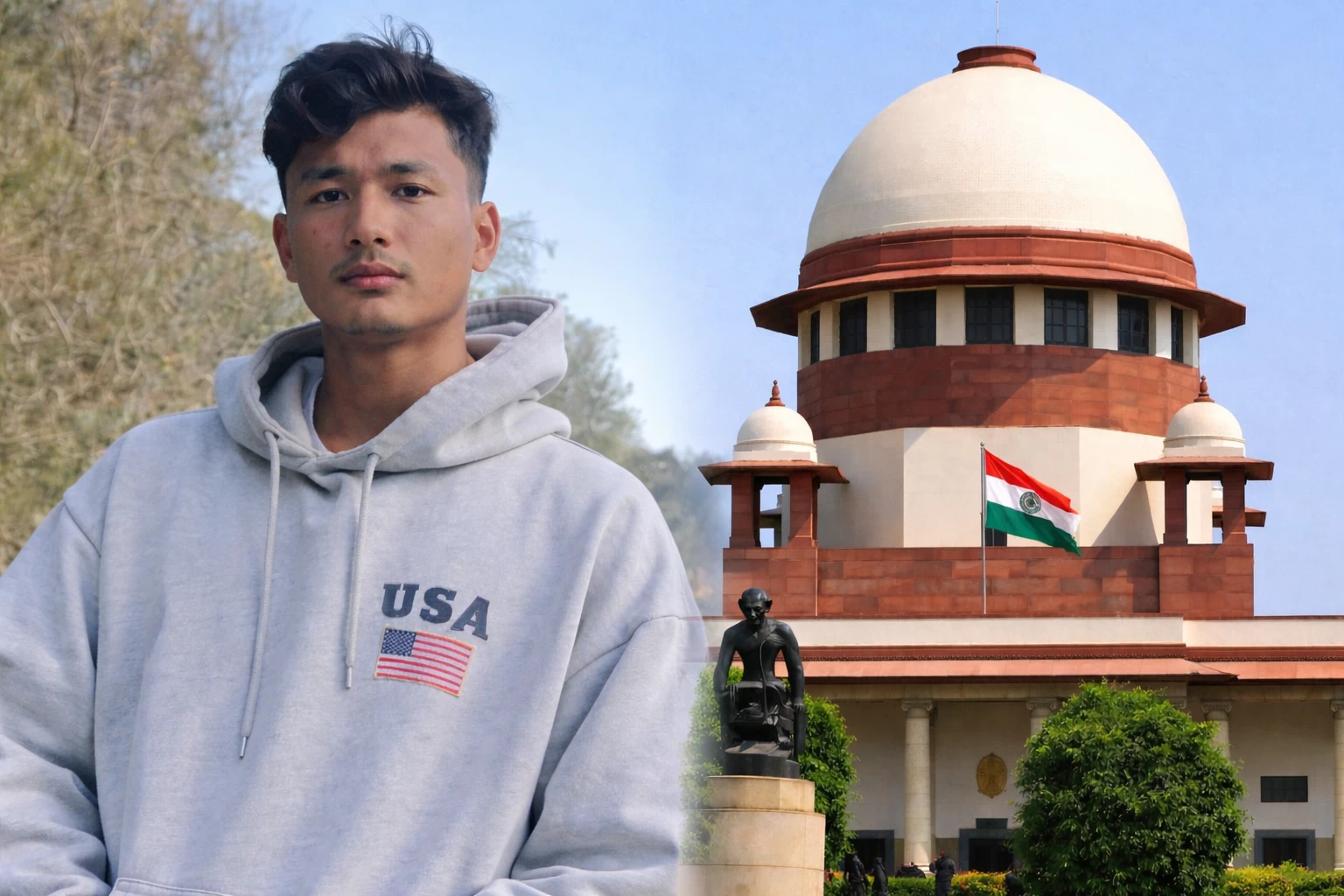
The petition was filed in the wake of the alleged racially motivated murder of Anjel Chakma, a youth from Tripura who was killed in Uttarakhand in December last year. The petitioner, Advocate Anoop Prakash Awasth, appearing in person, highlighted incidents of racial discrimination and group-based violence faced by individuals from North-Eastern states across the country.
A Bench comprising Chief Justice of India Surya Kant and Justices Joymalya Bagchi and Vipul Pancholi heard the matter.
During the hearing, the petitioner sought directions for the establishment of a nodal agency in States to address grievances relating to identity-based discrimination and violence. However, the Chief Justice expressed reservations about such a mechanism, observing that it could inadvertently encourage further divisions along regional lines.
“The moment we start entertaining litigations where the victims are unfortunately targeted because of their region, the negative message which will be, people will start identifying he is Keralite, Tamilian, Kashmirian...we are not meant to...we have a strong federal structure, we are supposed to be stronger with unity and not to be identified with regions...if we give start identifying special treatment for them,it will again lead to a regressive thing. After 75 years of independence, should we think of...” CJI Surya Kant said.
The Court suggested that the petitioner submit a representation to the competent authorities instead of pursuing judicial directions at this stage. In response, the petitioner referred to a 2017 statement in Parliament by Kiren Rijiju indicating that there was no proposal to create a nodal agency to address such concerns. He also submitted that the new criminal laws did not contain specific provisions dealing with such incidents.
The Chief Justice observed that such provisions may not have been introduced in view of the “negative consequences” they could entail.
The petitioner urged that at least educational institutions should have a grievance redressal mechanism to address identity-based discrimination. He emphasised that incidents of racial hostility continue to occur and that victims often lack institutional support.
The Bench, in its order, noted that the PIL raised “vital questions for the creation of a stringent and robust mechanism under the penal laws for prevention of group-based violence on the grounds of race, place of birth, language etc.” The Court observed that the plea referred to “hostile grounds of discrimination, prohibited by the Constitution,” and sought judicial guidelines in the absence of appropriate legislation.
The petition also sought directions for completion of investigation and trial relating to the “unfortunate occurrence” involving the death of Anjel Chakma.
Disposing of the writ petition, the Court stated that it was appropriate at this stage for the issues to be examined by the competent authority through the office of the Attorney General.
“As of now, we deem it appropriate that the aforesaid issues ought to be brought before the competent authority through the good offices of the learned AG,” the Bench observed.
The petitioner has been granted liberty to furnish a soft copy of the plea along with the Court’s order to the office of the Attorney General to enable consideration of the issues by the appropriate authorities.