The landscape of work in India might be on the verge of a big change, with the introduction of the Right to Disconnect Bill, 2025 in Parliament, employees could soon get a legal shield to reclaim their personal time. Here’s a deep dive into what this bill is all about, and why it could matter to you.
What is the Right to Disconnect Bill, 2025?
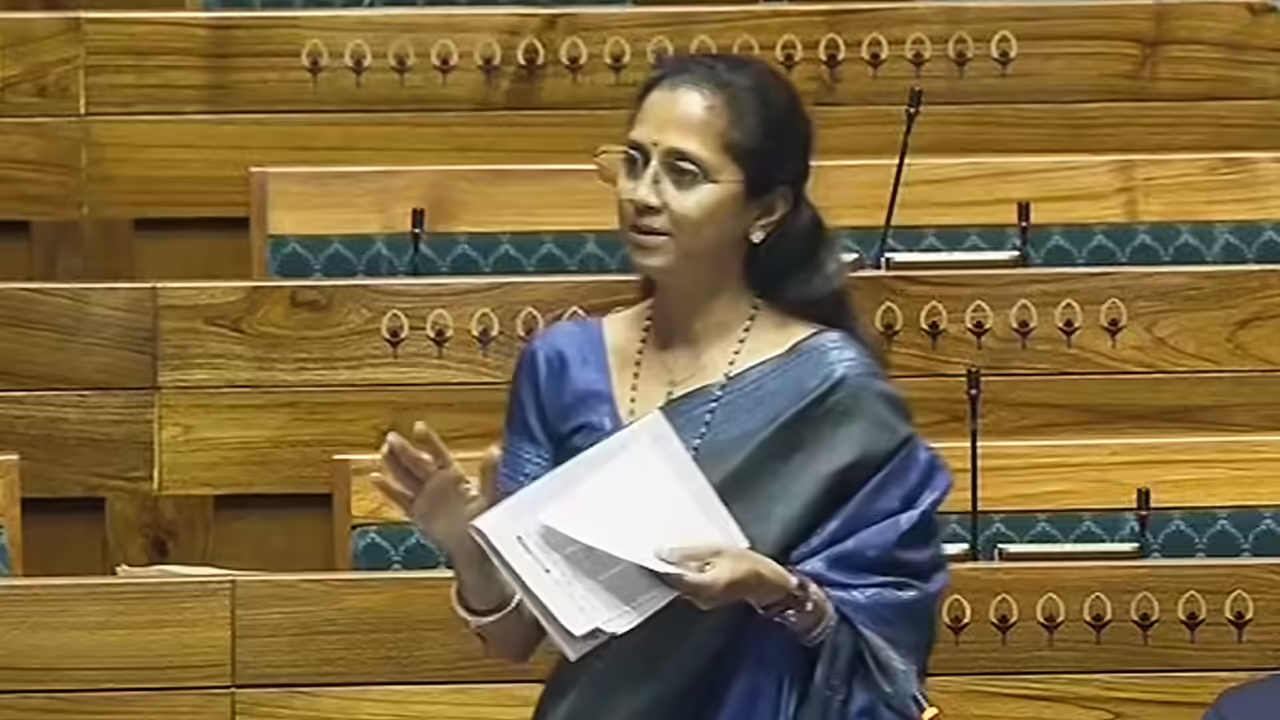
* The bill was introduced on December 6, 2025 in the Lok Sabha, by MP Supriya Sule of the Nationalist Congress Party.
* It is a private member’s bill, meaning it was proposed by a member of Parliament who is not a minister.
* The core idea: grant employees the legal right to disconnect from work-related electronic communication (calls, emails, messages, etc.) once official working hours end, including weekends and holidays.
* No obligation to respond after hours: Employees will not be legally required to answer calls, emails, texts or video-calls outside designated working hours or on holidays.
* No penalty or disciplinary action: If an employee chooses not to respond after hours, the employer cannot punish or penalise them.
* Overtime pay if they choose to work: Should an employee agree to work or respond beyond official hours, they must be paid overtime at the normal wage rate.
* Mutual agreement for exceptional communication: Employers can contact employees after hours only if there is a pre-agreed and mutually accepted rule, for example, in genuine emergencies.
* Institutional support: The bill proposes to set up an Employees’ Welfare Authority, responsible for overseeing compliance, and implementing measures such as counselling services and “digital detox” centres to promote healthy work-life balance.
* Penalties for non-compliant employers: Organizations that violate the provisions (e.g. pressuring employees to respond outside hours) may face a penalty equivalent to 1% of total remuneration of their employees.
Why This Bill Matters — Key Benefits
* Real Work-Life Balance: In a world where remote work and digital communication blur the line between “office time” and “personal time,” the bill formally recognizes that rest and personal time matter. Employees get their evenings, weekends and holidays back, without guilt or fear of backlash.
* Mental Health & Well-being: By reducing “always-on” pressure, midnight emails, weekend texts, after-hours calls, the bill aims to reduce stress, burnout, sleep deprivation and “info-overload.” This could improve mental health and overall life satisfaction.
* Fair Compensation & Transparency: If work beyond hours is unavoidable, it must be fairly compensated. This discourages “free overtime” and brings transparency to after-hours expectations.
* Respect for Personal Time: The formal recognition of personal boundaries, legally protected, helps change workplace culture: from “always available” to “available during work hours.” It gives employees permission to unplug.
* Supportive Infrastructure & Accountability: Institutional support through the Employees’ Welfare Authority and proposed counselling/digital-detox initiatives signals that this isn’t just a rule, it’s a structural shift in how we view work and life.
What It Could Mean for You & the Indian Workplace
If this bill becomes law:
* For many employees across private companies, IT firms, startups, BPOs, evenings and weekends may finally mean what they’re meant to: personal time.
* The culture of “reply-immediately” may reduce, enabling people to reconnect with family, hobbies, rest, and mental peace.
* Employers may need to plan better: set clearer communication policies, negotiate emergency protocols, manage work volumes within working hours, and compensate overtime.
* Over time, companies that respect boundaries might find happier, more productive employees, fewer burnouts, better retention, and a healthier workforce.
The Reality Check
* The bill is currently a private member’s bill. Historically, very few such bills have turned into law.
* Implementing this across sectors will be challenging, especially in industries requiring 24/7 availability (customer-support, global teams across time-zones, emergency services). It requires cooperation from employers, cultural change, and clear definitions of “work hours.”
* Enforcement could be tricky: monitoring compliance, penalising violations, and ensuring employees feel safe to “disconnect” without fear of subtle retaliation (like slower growth, fewer promotions) will be key.
The Right to Disconnect Bill, 2025 may be modest in length, but it is bold in ambition. By seeking to turn off the never-ending work-ping cycle, it aims to restore something precious, the right to personal time. For millions of Indian workers caught in the swirl of digital work culture, that could make all the difference between living to work, and working to live.