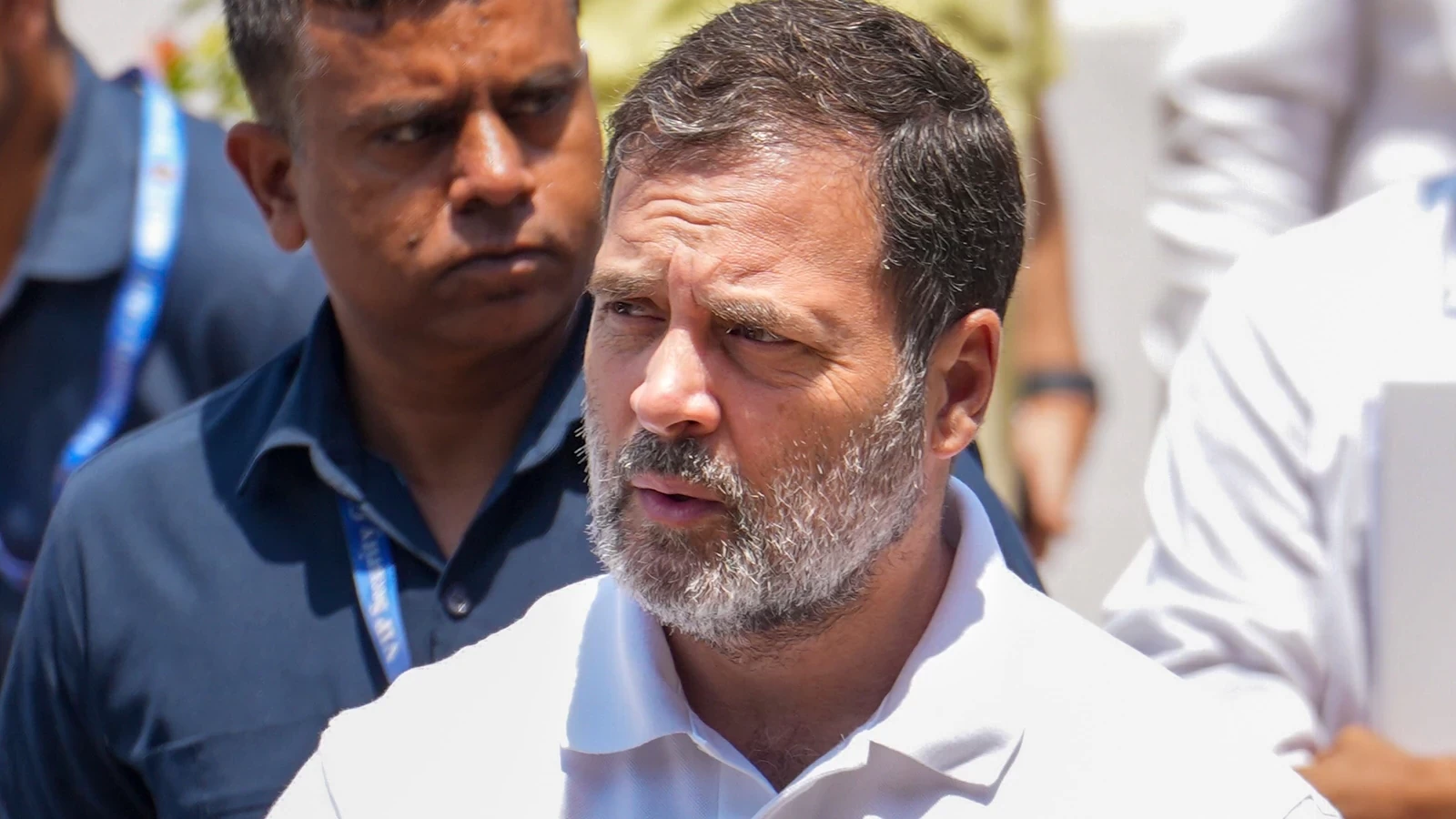
The Supreme Court on Monday stayed criminal defamation proceedings against Congress leader Rahul Gandhi, even as it criticised his remarks about the Indian Army made during the Bharat Jodo Yatra in December 2022. The Court questioned both the substance and the platform of Gandhi’s comments, asserting that such statements could undermine national morale during sensitive times.
A bench comprising Justices Dipankar Datta and Augustine George Masih expressed concern over Gandhi's claim that the Chinese Army had “captured 2,000 square kilometres of Indian territory,” “killed 20 Indian soldiers,” and “thrashed our jawans in Arunachal Pradesh.” The statement, made during a press interaction on 9 December 2022, referred to the border clash in the Yangtse sector of Arunachal Pradesh.
“Why do you have to say this in the media or social media posts?” the bench asked. “Were you there? How did you get to know that 2,000 square kilometres has been captured?” The Court further remarked, “A true Indian will not say all this.”
The case arose from a defamation complaint filed by Uday Shankar Srivastava, a retired director of the Border Roads Organisation (BRO). Srivastava accused Gandhi of spreading misinformation with the intent to demoralise Indian soldiers and mislead the public. He pointed out that the Indian Army had officially stated that Chinese troops were repelled during the Yangtse confrontation.
The Allahabad High Court, in its order dated 29 May 2025, had refused to quash a trial court’s summons against Gandhi, ruling that a prima facie case existed. The High Court also dismissed the argument that Gandhi’s statement was made in his capacity as a Member of Parliament, and held that prior sanction under Section 197 of the Criminal Procedure Code was not required.
Appearing for Rahul Gandhi, senior advocate Abhishek Manu Singhvi argued that the Congress leader retains the right to free speech under Article 19(1)(a) of the Constitution. “Being a Member of Parliament does not take away this right,” Singhvi said, adding that Gandhi’s statement aimed to prompt the media to question the government on national security issues.
However, the Supreme Court did not accept this justification lightly. “You go on saying Article 19(1)(a), but as Leader of the Opposition, should you really be making such statements at a time of cross-border conflict?” the bench asked. It further noted, “Whatever you have to say, why don’t you say it in Parliament?”
The Court agreed to examine several legal challenges raised by Gandhi, including the argument that the trial court issued summons without hearing him. The bench appeared willing to scrutinise whether this procedural lapse affected the maintainability of the case.
Singhvi also contended that the complainant did not qualify as an “aggrieved person” under defamation law, as required for a valid complaint. The bench took note of this objection and said it would hear all arguments in detail after three weeks.
Senior advocate Gaurav Bhatia, representing the complainant, opposed the stay and defended the trial court’s decision. However, the Supreme Court maintained that it would address all objections during the next hearing.