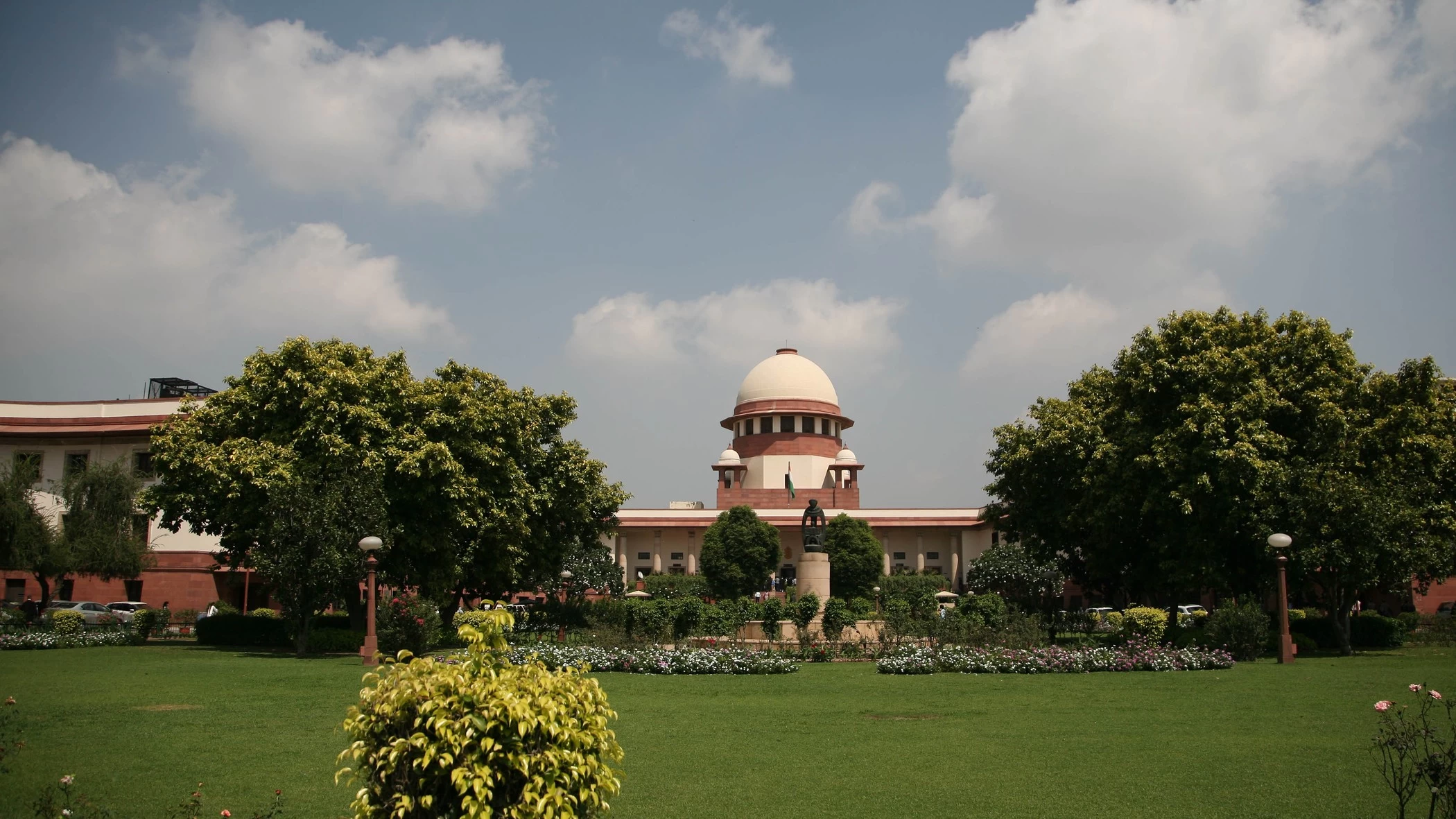
The Supreme Court on Thursday ruled that Governors and the President cannot be compelled to act on state legislation within deadlines imposed by the judiciary, holding that such directions would violate the separation of powers and disrupt the constitutional framework. At the same time, the Court stressed that prolonged or intentional inaction by a Governor may attract limited judicial intervention to prevent legislative paralysis.
Delivering the advisory opinion, Chief Justice of India Bhushan R. Gavai, speaking for the five-judge Constitution Bench, said that although decisions taken under Articles 200 and 201 are generally non-justiciable, the courts may step in only where “the will of the people expressed through the legislature cannot be completely defeated” by deliberate delay. Even in such cases, the judiciary can merely require the Governor to choose one of the constitutionally available courses of action, without examining the merits of the bill or directing a particular outcome.
The Bench clarified that while Governors normally act on the aid and advice of the Council of Ministers, the Constitution recognises limited zones of discretion. It would therefore be “unfathomable”, the Court held, to interpret Article 200 as compelling a Governor to blindly follow ministerial advice when returning a bill or deciding whether to reserve it for the President, both of which require independent constitutional judgement.
The Bench comprised Justices Surya Kant, Vikram Nath, P. S. Narasimha and Atul S. Chandurkar alongside the CJI. The advisory opinion, issued under Article 143, marks the first Presidential Reference in several years and carries considerable constitutional weight, even though such opinions are not formally binding.
In its analysis of Articles 200 and 201, the Court examined the range of options available to a Governor. CJI Gavai noted that although some States insisted there were only three options, grant assent, withhold assent or reserve the bill, the constitutional provision must be read in a way that encourages “constitutional dialogue” and strengthens the federal balance, rather than imposing mechanical constraints.
On the core issue of judicially prescribed timelines, the Bench was categorical. “Imposition of timelines will be antithetical to constitutional boundaries and will trample upon separation of powers,” the Chief Justice said. The Court held that constitutional silence on time limits could not be filled by judicial fiat, and firmly rejected the notion of “deemed assent”, stating that automatic approval would contradict the constitutional roles assigned to Governors and the President.
In addition, the Bench reaffirmed that the performance of functions under Articles 200 and 201 is ordinarily not amenable to judicial review and that courts cannot be asked to scrutinise bills before they become law. It added that the President is not required to approach the Court for guidance every time a bill is reserved for consideration.
Despite these restraints, the Court recognised that indefinite inaction could be used to subvert the legislative process. In such “extreme circumstances”, courts may issue a limited mandamus directing the Governor to exercise one of the options under Article 200. However, this power cannot extend to directing which option should be selected. The Court stressed that this approach ensures that the Governor is not reduced to a “rubber stamp”, while also preserving the independence of constitutional offices from excessive judicial direction.
The advisory opinion follows extensive hearings that concluded on 11 September after ten days of argument. President Droupadi Murmu sought the Court’s guidance in May after a two-judge Bench, in an April judgment in State of Tamil Nadu vs Governor of Tamil Nadu, imposed strict deadlines, one month for Governors to act on re-enacted bills and three months for Presidential assent, and invoked Article 142 to “deem” ten Tamil Nadu bills as having received assent.
The President placed fourteen constitutional questions before the Court, including whether judicial timelines were permissible, whether gubernatorial or presidential decisions could be reviewed, whether deemed assent was lawful, and whether Article 142 could override explicit constitutional provisions. Several States, including West Bengal, Tamil Nadu, Punjab, Telangana and Karnataka, opposed revisiting the April ruling, arguing that Article 143 could not be used to reopen judicial precedent.
In its advisory opinion, the Constitution Bench concluded that the April 8 judgment “did not lay down the correct law” and cannot be cited as precedent following Thursday’s authoritative pronouncement.
During the hearings, Solicitor General Tushar Mehta submitted that the April ruling “does not lay down the correct law”. The Attorney General argued that the Court could not rewrite Article 200 to make it “look better” and emphasised the constitutional importance of gubernatorial discretion. Senior counsel for the States countered that persistent delays by Governors have serious implications for governance and democratic accountability, and that some degree of judicial oversight is necessary to avoid constitutional deadlock.