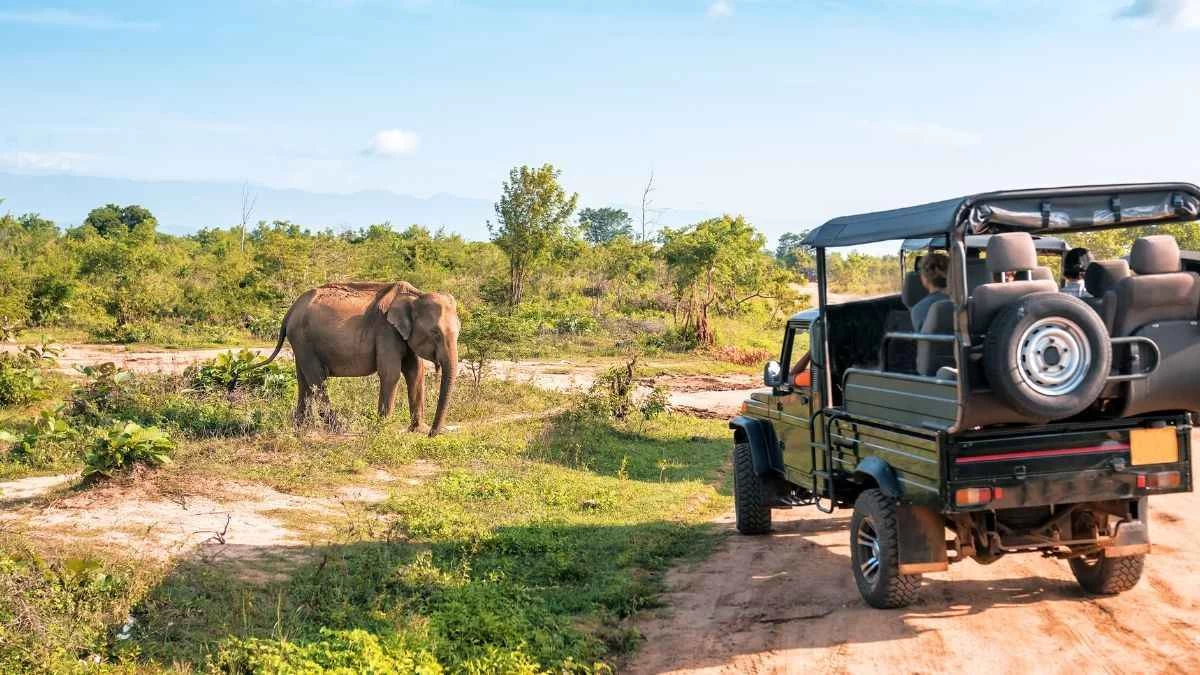
The Supreme Court on Thursday halted the Haryana government’s proposed Aravalli zoo safari project in Gurugram, making it clear that no activity would be permitted in the ecologically sensitive Aravalli range until its precise legal definition is settled.
A Bench led by CJI Surya Kant said the project could not proceed while a larger issue concerning the definition of the Aravalli hills remains pending before the court. “Aravalli is a composite range. It neither starts in Haryana nor ends in Haryana. There is no scope of permitting the project unless there is a clear definition on Aravalli,” the Bench observed, while posting the matter along with a suo motu case on the same issue.
The court underlined that it would not allow even minimal intervention in the region without a comprehensive expert review. “We are not going to grant permission over a single inch of land in this area unless we get an independent expert body to examine all these issues,” the Bench said.
The plea challenging the safari project was filed by five retired Indian Forest Service officers, who argued that the plan would severely damage the fragile ecosystem of the Aravalli hills. Represented by advocate Shibani Ghosh, the applicants described the project as a potential “death knell” for the region, alleging it would lead to large-scale construction of permanent infrastructure, including roads, guest houses, staff quarters, animal enclosures and utility networks within a protected forest landscape.
The court, however, remarked that it would examine the application independently as part of the broader Aravalli proceedings. “This application we do not know at whose instance it is filed. We will deal with it independently in the Aravalli matter,” it said.
The matter is now likely to be heard on February 26, alongside other petitions relating to the Aravalli range.
The larger issue stems from a November 20, 2025 judgment by another Bench which defined the Aravalli hills as formations with an elevation of 100 metres or more above local relief. That interpretation drew criticism from environmental experts, who argued that it lacked clarity and could undermine ecological protection. In December 2025, the Supreme Court initiated suo motu proceedings to revisit the definition and invited suggestions for independent experts to reassess the matter, keeping ecological integrity in view. The earlier order was kept in abeyance.
During Thursday’s hearing, Haryana’s Additional Advocate General, Lokesh Singhal, informed the court that the Central Empowered Committee (CEC) had submitted its report on the project, as directed earlier on January 21.
The CEC report, filed on February 10, recommended that the state place on record a revised Detailed Project Report (DPR), along with geo-referenced maps, land particulars, statutory clearances and ecological impact assessments. Singhal urged the court to permit preparation of the revised DPR in line with the committee’s observations.
The Bench, also comprising Justices Joymalya Bagchi and Vipul M Pancholi, declined the request, noting that it had already ordered on October 8, 2025, that no further steps be taken in respect of the project. “The step to prepare DPR is a step forward in this direction,” the court said, indicating that even preparatory actions could not proceed at this stage.
The judges further cautioned that the state might attempt to present an overly optimistic account of the project’s environmental impact. Given an opportunity, the government could project a “rosy picture” of increased tree cover and green zones to “trap” the court into granting approval, the Bench observed.
The Haryana government had earlier revised the scale of the project, stating that it would occupy approximately 3,300 acres instead of the initially proposed 10,000 acres. According to the state’s plan, 30 per cent of the demarcated land would be used for enclosures, while 70 per cent would remain a green zone.
Rejecting claims that the project would harm the ecosystem, the state argued that it would in fact serve as a conservation initiative. “Instead of death knell, the project will be conservation initiative for Aravallis as the area will be closed with boundary wall and ecological restored with local species of flora,” it had stated in its affidavi