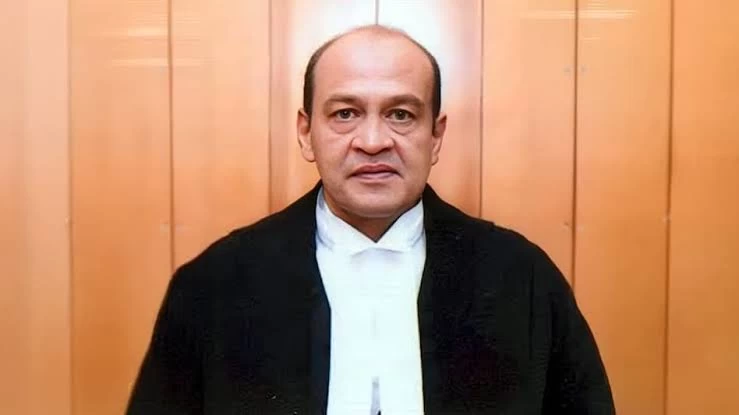
The Supreme Court on Thursday dismissed a petition filed by Justice Yashwant Varma, challenging the legality and findings of an in-house judicial inquiry that found “strong inferential evidence” linking him to the discovery of sacks filled with charred currency notes at his official residence in Delhi earlier this year.
A bench comprising Justices Dipankar Datta and A.G. Masih upheld the legality and constitutional validity of the in-house inquiry mechanism. Delivering the verdict, Justice Datta said, “With these observations, we have dismissed the petition.”
The Court rejected Justice Varma’s claim that the internal judicial process violated his constitutional or fundamental rights. It affirmed that the in-house inquiry procedure had legal backing and had been consistently upheld in previous judgments of the apex court.
Justice Varma had argued that the inquiry functioned as a parallel mechanism outside the constitutional provisions laid down in Articles 124 and 217, which outline the procedure for removing judges. However, the Court disagreed, ruling that the in-house process did not infringe upon any constitutional safeguards.
“The in-house procedure does not contemplate a hearing before the CJI or the collegium,” the bench noted.
The Supreme Court also dismissed the contention that the then Chief Justice of India (CJI), Justice Sanjiv Khanna, acted beyond his powers by recommending Justice Varma’s removal to the President and Prime Minister without granting a personal hearing.
The bench said the CJI was “not a mere post office” but a constitutional authority entrusted with the responsibility of preserving the judiciary’s institutional integrity.
During earlier hearings, the Court had observed that the Judges’ Protection Act allowed for non-punitive measures to be taken in the interest of the institution. It further stated that the term “otherwise” in the Act gave the judiciary, including the CJI, a broad mandate to act when the reputation of the institution was at stake.
Justice Varma, a former judge of the Delhi High Court, came under scrutiny in March 2025 after sacks containing charred cash were discovered at his official residence following a fire. He was promptly stripped of judicial responsibilities and repatriated to his parent High Court in Allahabad.
A three-member in-house committee, comprising then Chief Justices Sheel Nagu, G.S. Sandhawalia, and Justice Anu Sivaraman, was constituted. The panel concluded its report on 3 May, finding no direct evidence but noting “strong inferential evidence” of Varma’s involvement.
The committee observed that his conduct “belied the trust reposed in a constitutional judge” and recommended that impeachment proceedings be initiated.
In addition, the Court also threw out a related petition filed by advocate Mathews Nedumpara, who had sought the registration of an FIR into the matter. The Court held that he had presented “incorrect facts” and found no merit in his plea.
Justice Varma’s legal team, led by senior advocates Kapil Sibal and Mukul Rohatgi, had earlier argued that the inquiry process violated principles of natural justice, citing denial of cross-examination rights and the absence of a personal hearing before the CJI.
Sibal had argued, “The recommendation for removal has to go. It is more than persuasive. When the CJI recommends removal, it virtually amounts to a death knell for a judge.”
However, the bench responded that the final decision lies with Parliament and is not bound by the CJI’s recommendation.
The verdict clears the path for possible impeachment proceedings in Parliament. On 21 July, the opening day of the Monsoon Session, 145 Lok Sabha MPs and 63 Rajya Sabha MPs submitted notices seeking Justice Varma’s removal.
Justice Varma has consistently denied any wrongdoing. In a letter to CJI Khanna dated 6 May, he called the case a “conspiracy” and firmly rejected suggestions to resign or take voluntary retirement.