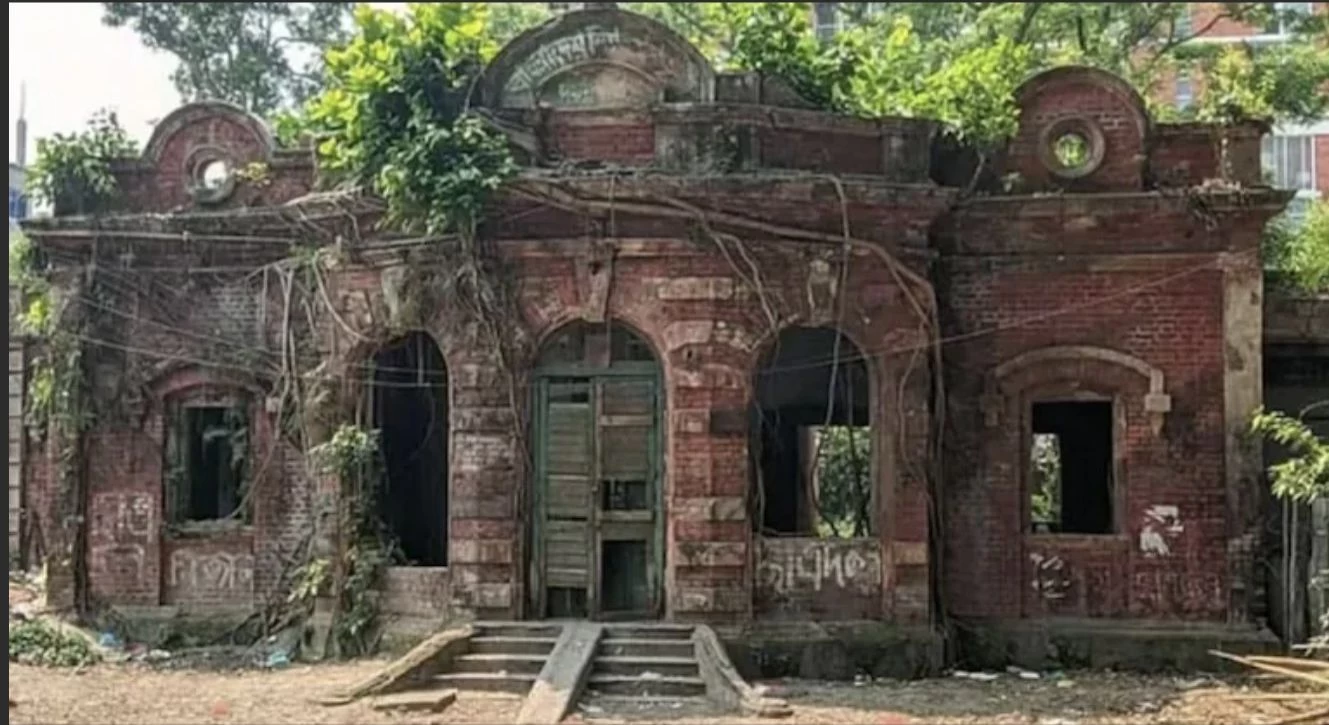
India has issued an urgent appeal to the Bangladeshi government to reconsider the demolition of the ancestral home of legendary filmmaker Satyajit Ray in Dhaka, a site of immense cultural significance for Bengalis on both sides of the border. The century-old house, located on Horikishore Ray Chowdhury Road in Mymensingh, belonged to Ray’s grandfather, Upendra Kishore Ray Chowdhury, a revered writer and publisher, and was home to three generations of the Ray family, including Ray’s father, poet Sukumar Ray. The Indian Ministry of External Affairs (MEA) has expressed deep concern over the planned demolition, offering assistance to restore the property as a museum to preserve its legacy as a symbol of Bengali cultural heritage.
The Satyajit Ray Connection
Satyajit Ray, one of the most celebrated filmmakers in global cinema, is a towering figure in Bengali culture, known for masterpieces like Pather Panchali and Pratidwandi. His work, deeply rooted in Bengali sensibilities, earned him international acclaim, including an Academy Award for Lifetime Achievement. The house in question, though dilapidated and unused for nearly a decade, is a tangible link to the Ray family’s contributions to literature, art, and cinema. Upendra Kishore Ray Chowdhury, a pioneer in children’s literature and printing technology, laid the foundation for the family’s cultural legacy, which was carried forward by Sukumar Ray’s whimsical poetry and Satyajit Ray’s cinematic brilliance. The demolition of this house is seen as a profound loss to the shared cultural heritage of India and Bangladesh.
Turmoil and Cultural Erasure
The demolition plan comes amid a turbulent period in Bangladesh following the ouster of former Prime Minister Sheikh Hasina in August 2024, after a student-led uprising ended her 15-year rule. The interim government, led by Nobel laureate Muhammad Yunus, has faced criticism for its handling of cultural and historical sites. Since August 2024, over 1,500 sculptures, murals, and memorials linked to Bangladesh’s liberation history have reportedly been vandalised or destroyed, raising alarms about a systematic erasure of the nation’s heritage. The destruction of a Liberation War Memorial Mancha mural in Lalmonirhat in March 2025, which commemorated key moments like the 1952 language movement and the 1971 victory over Pakistani forces, further underscores this trend. The decision to demolish Ray’s ancestral home to make way for a semi-concrete Shishu Academy building has sparked outrage among historians, cultural activists, and local residents in Bangladesh. Despite objections from Dhaka’s Department of Archeology, which recognises the house as an archeological heritage site, the authorities have proceeded with the demolition, citing “necessary approvals.” This move has fuelled perceptions of disregard for Bengal’s cultural legacy under the current regime.
India’s Plea
The MEA, in a statement on July 15, 2025, described the house as a “landmark status symbolising the Bangla cultural renaissance” and urged Bangladesh to explore options for its repair and reconstruction. “The Government of India would be willing to extend cooperation for this purpose,” said spokesperson Randhir Jaiswal, emphasising the site’s importance as a bridge between the two nations’ shared history. West Bengal Chief Minister Mamata Banerjee echoed this sentiment, calling the demolition “heartbreaking” and urging both governments to act swiftly to preserve the site. She described the Ray family as “torchbearers of Bengal’s culture,” highlighting the emotional resonance of the issue for Bengalis worldwide.