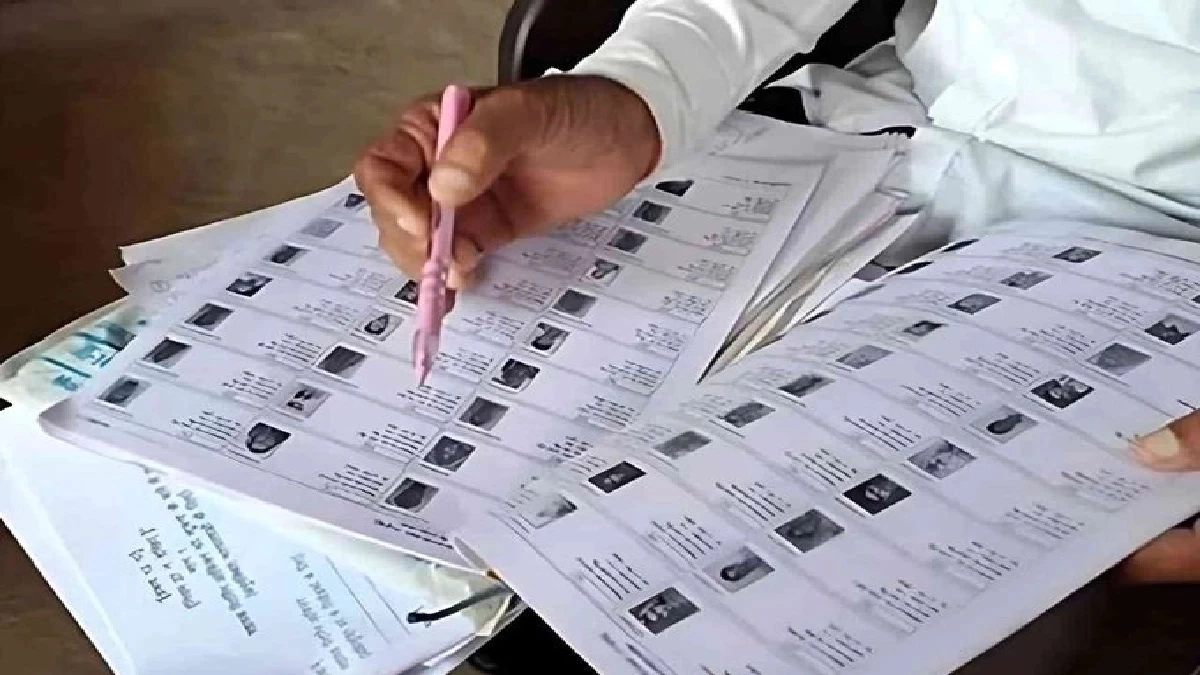
About 97.2 lakh names in Tamil Nadu and 73.7 lakh in Gujarat have been dropped from the draft electoral rolls published by the Election Commission of India on Friday following the Special Intensive Revision (SIR) of voters’ lists. The cuts are significantly higher than in other states that have undergone the revision exercise. While most states have seen a reduction of about 7–8 per cent in their electorate due to deaths, migration or duplicate registrations, Tamil Nadu and Gujarat have recorded drops of 15.2 per cent and 14.5 per cent, respectively, the steepest so far.
In poll-bound Tamil Nadu, the draft rolls published by District Election Officers across all 38 districts show that only 5.43 crore voters remain from a pre-SIR electorate of 6.41 crore. This means over 97 lakh names have been removed, making Tamil Nadu the state with the highest number of deletions among those that have completed the SIR.
The bulk of the deletions were attributed to voters being marked as shifted or absent. According to the official breakup, around 53 lakh names (54%) were categorised as shifted, 27 lakh (28%) as deceased, 13.6 lakh (14%) as absent or untraceable, 3.98 lakh (4%) as duplicate registrations, and about 16,400 cases under other reasons.
Chief Electoral Officer Archana Patnaik, addressing the media on Friday evening, said the revision exercise was aimed at cleaning up the rolls and that eligible voters could still be added back during the claims and objections phase.
Chennai recorded the most dramatic impact, with a 35.6 per cent drop in voters. Around 14.25 lakh names were removed from the city’s earlier electorate of 40.04 lakh. In the state capital, only 25.79 lakh voters made it to the draft roll.
Several Assembly constituencies in Chennai saw deletions exceeding 40 per cent. Anna Nagar recorded the highest reduction at 42.2 per cent, followed by Villivakkam (40.7%), Thousand Lights (40.7%), T Nagar (40.8%) and Velachery. Even constituencies such as Virugampakkam, Harbour, and Deputy Chief Minister Udhayanidhi Stalin’s Chepauk–Thiruvallikeni saw deletions ranging between 37 and 39 per cent.
Outside Chennai, districts such as Chengalpattu, Tiruppur, Coimbatore and Kancheepuram also witnessed substantial reductions, each losing several lakh voters. In Shozhinganallur constituency alone, voter numbers fell by over 31 per cent, from 7.02 lakh to 4.84 lakh. District Election Officer J Kumaragurubaran said that 8 to 10 lakh voters could be re-added to the rolls by the end of the process through Form 6 applications.
Gujarat has mirrored a similar trend. The ECI’s draft rolls show that the state’s electorate has shrunk from 5.08 crore to 4.34 crore, with 73.73 lakh names removed during the SIR.
Of the deleted names, 51.86 lakh voters were marked as shifted or not found at their registered addresses, 18.07 lakh were recorded as deceased, and 3.81 lakh were identified as having multiple enrolments. The Gujarat Chief Electoral Officer said verification of over 10.69 lakh discrepancies flagged in the ASD (Absent, Shifted, Deceased) list has already been completed.
The SIR exercise in Gujarat began on November 4, with booth-level officers distributing and collecting enumeration forms across the state.
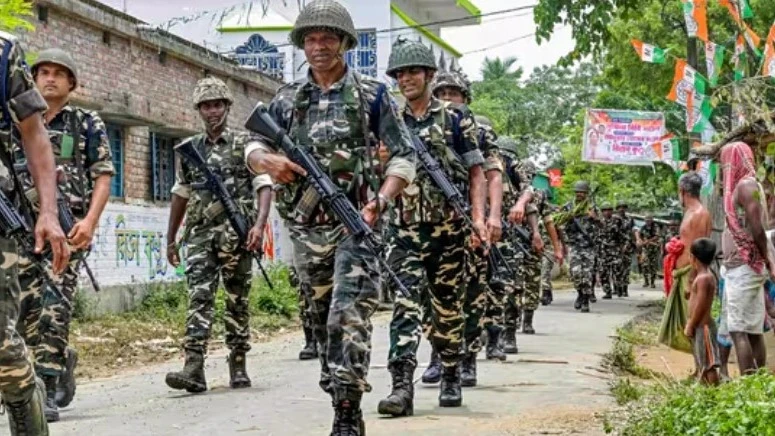
Earlier, West Bengal, another poll-bound state, published its draft rolls, showing 58 lakh deletions following SIR. While substantial, the number remains lower than the cuts recorded in Tamil Nadu.
Draft rolls for the remaining Phase 2 states are scheduled to be released in the coming days. Kerala, Madhya Pradesh, Chhattisgarh, and the Andaman and Nicobar Islands are due on December 23, while Uttar Pradesh will publish its draft rolls on December 31.
The Election Commission has reiterated that genuine electors can still be included during the claims and objections window, which runs from December 19 to January 18, 2026, before the final rolls are published.