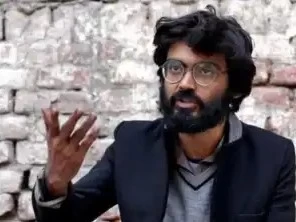
Activist and former Jawaharlal Nehru University (JNU) student Sharjeel Imam on Saturday has approached the Supreme Court challenging the recent Delhi High Court decision denying him bail in a case linked to the alleged conspiracy behind the February 2020 Delhi riots. The Delhi High Court, on September 2, 2025, dismissed bail pleas for Imam, fellow activist Umar Khalid, and 11 others accused in the same case, citing evidence of a “well-orchestrated conspiracy” under the Unlawful Activities (Prevention) Act (UAPA).
The Delhi High Court’s bench, comprising Justices Navin Chawla and Shalinder Kaur, rejected the bail applications of Imam, Khalid, Athar Khan, Abdul Khalid Saifi, Gulfisha Fatima, Meeran Haider, Shifa-ur-Rehman, Mohd Saleem Khan, and Shadab Ahmed, among others. The court argued that the violence, which claimed 53 lives and injured over 700 during protests against the Citizenship Amendment Act (CAA) and National Register of Citizens (NRC), was not spontaneous but a premeditated plot with a “sinister motive.” The prosecution, led by Solicitor General Tushar Mehta, claimed the riots were intended to defame India globally, pointing to inflammatory speeches and coordinated activities via WhatsApp groups as evidence.
Imam’s legal team argued that he was “completely disconnected” from the co-accused, including Khalid, and maintained that his speeches and communications did not incite unrest. They emphasised his prolonged detention since August 25, 2020, without the trial commencing in over five years, asserting that this violates his right to a speedy trial under Article 21 of the Constitution. The defence also highlighted that other co-accused, such as Natasha Narwal, Devangana Kalita, and Asif Iqbal Tanha, were granted bail in 2021, arguing for parity. However, the High Court dismissed these claims, noting that the roles of Imam and others were “prima facie grave” compared to those previously granted bail.
The Delhi Police, in their opposition, described the riots as a “clinical and pathological conspiracy,” alleging that speeches by Imam, Khalid, and others fuelled communal tensions by referencing contentious issues like the CAA, NRC, Babri Masjid, and triple talaq. The prosecution further argued that the principle of “bail is the rule, jail is the exception” does not apply in cases involving such serious charges under UAPA.
The Supreme Court’s intervention is now sought as Imam and his co-accused face over four years of incarceration without a trial. Critics, including legal experts and activists, have raised concerns about the prolonged pre-trial detention and the application of UAPA, which they argue reverses the presumption of innocence. Social media was outraged and called the High Court’s ruling a “travesty of justice,” noting that while the accused remain detained, others allegedly responsible for hate speeches have faced no consequences.
Imam’s move to the Supreme Court follows a similar appeal planned by Khalid’s team, with his partner, Banojyotsna Lahiri, stating that five years of detention without trial is itself grounds for bail.