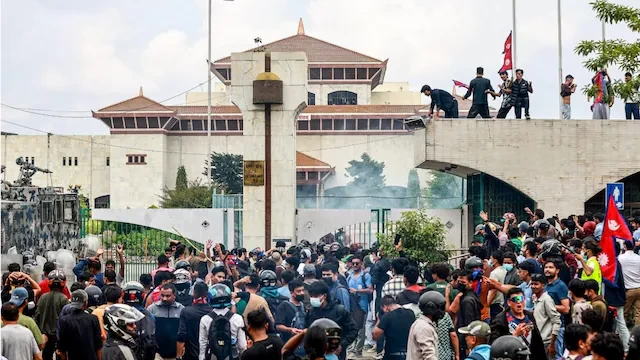
Nepal is reeling from violent clashes that erupted on Monday between protesters and security forces following a sweeping government ban on 26 major social media platforms, including Facebook, Instagram, WhatsApp, YouTube, and X, effective from midnight on September 4. The ban, enacted due to non-compliance with new regulatory requirements, has ignited widespread unrest, particularly among young Nepalese, who view it as a direct assault on freedom of expression and a distraction from systemic government corruption. The police crackdown on demonstrators has led to at least 12 confirmed deaths and over 150 injuries, with curfews and military deployment intensifying tensions across the country.
Escalating Protests and Police Response
On Monday, thousands of protesters, predominantly students and young adults, flooded the streets of Kathmandu, Pokhara, and other major cities, waving Nepalese flags and chanting slogans like “End corruption, not our voices” and “Lift the social media ban.” The demonstrations, which began peacefully at key public squares, turned chaotic as crowds marched toward restricted government zones, including the Federal Parliament in Kathmandu. Protesters dismantled barricades and clashed with security forces, who deployed tear gas, water cannons, and, in some cases, live ammunition to disperse the crowds.
Local hospitals reported a surge in casualties, with the Ministry of Health confirming 12 deaths and over 150 injuries, including several journalists covering the protests. Witnesses described scenes of chaos, with one student protester stating, “The police didn’t just use tear gas; they fired real bullets. I saw people fall right in front of me.” The government has imposed a curfew in Kathmandu and deployed the army to maintain order, further escalating fears of repression.
Why the Ban?
The Nepalese government, under Prime Minister K.P. Sharma Oli, defended the social media ban as a necessary step to regulate online platforms and curb misinformation, cybercrime, and unregulated content. The decision stems from the 2023 Social Media Regulation Act, which mandates that platforms register with authorities, establish local offices, and comply with strict oversight measures. The government claims the banned platforms failed to meet these requirements by the stipulated deadline.
However, critics argue the ban is a pretext to silence dissent and divert attention from allegations of corruption within the ruling coalition. Many young Nepalese, who rely heavily on social media for communication, activism, and livelihoods, see the move as an attempt to control the narrative ahead of upcoming elections. “This isn’t about regulation; it’s about power,” said a protester in Pokhara. “They want to shut us up because we’re exposing their failures online.”
The unrest has drawn international concern, with human rights organisations calling for restraint and urging the Nepalese government to restore access to social media and respect freedom of expression. The ban has also disrupted businesses, education, and communication, with many Nepalese turning to VPNs to bypass restrictions. However, inconsistent internet access in rural areas has left millions cut off from critical information.
As protests continue, Nepal faces a deepening crisis.