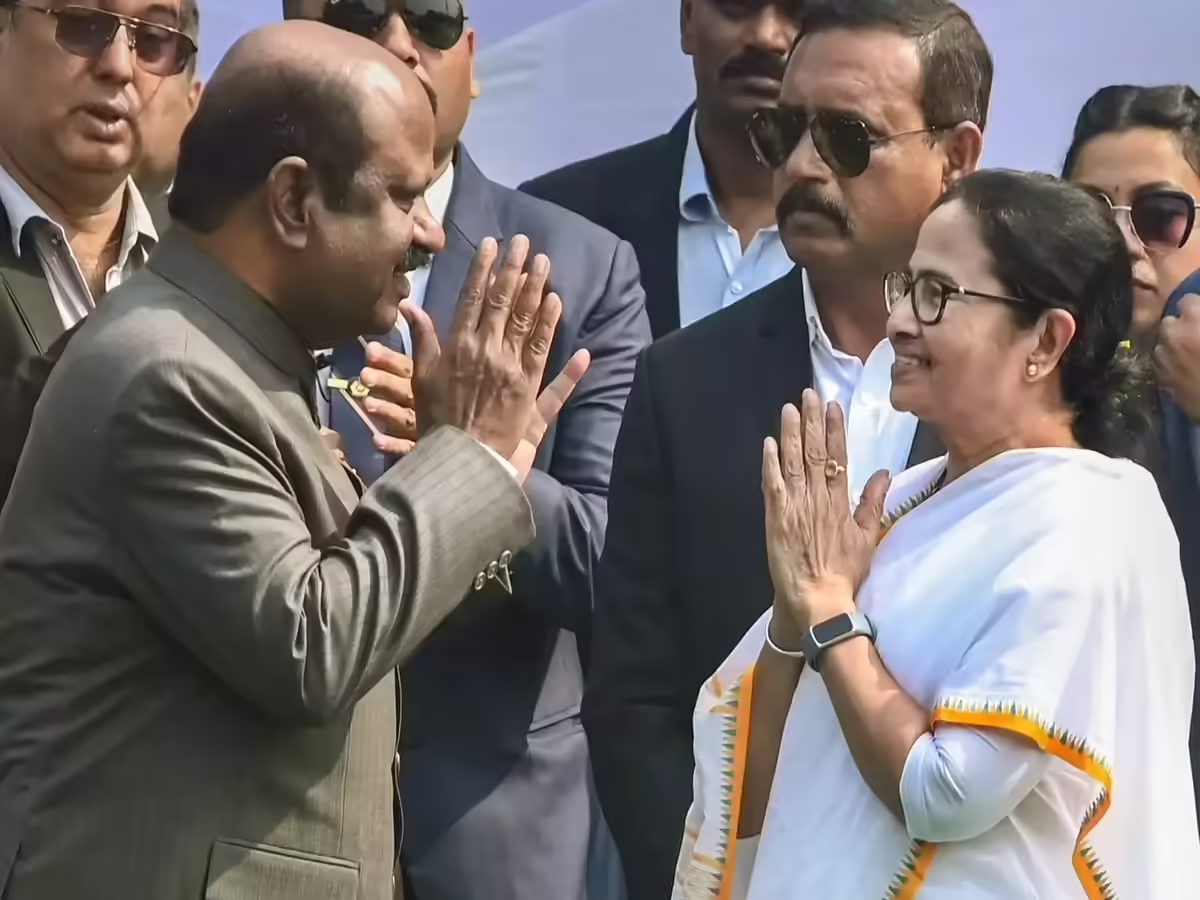
A three-judge Bench led by Chief Justice of India Surya Kant, along with Justices Joymalya Bagchi and Vipul M. Pancholi, is slated to hear petitions linked to West Bengal Chief Minister Mamata Banerjee and three other individuals. The petitions have been filed by Mostari Banu and Trinamool Congress MPs Derek O’Brien and Dola Sen, according to details available on the Supreme Court’s website.
Ahead of the scheduled hearing on the SIR issue, Banerjee also filed an interlocutory application before the apex court, requesting permission to personally appear and present arguments.
Since the launch of the Special Intensive Revision (SIR) of electoral rolls in West Bengal, Chief Minister Mamata Banerjee has sent five communications to Chief Election Commissioner Gyanesh Kumar, raising concerns over the conduct of the exercise.
In her most recent letter, dated January 12, 2026, Banerjee alleged that voters submitting documents during the SIR process are not being given proper acknowledgements or receipts. She warned that the absence of basic administrative safeguards was leading to unnecessary hardship for citizens.
“Such administrative lapses are being unfairly forced upon citizens, causing severe harassment and resulting in the denial of their constitutional rights. This defeats the very objective of the Special Intensive Revision, which is intended to strengthen and purify the electoral rolls, not to exclude genuine and eligible voters,” it read.
She stated that such procedural failures were placing an undue burden on voters and effectively depriving them of their constitutional rights. According to her, the SIR exercise, which is meant to enhance the accuracy and integrity of electoral rolls, was instead being implemented in a manner that risked excluding legitimate and eligible voters.
The first-phase draft electoral roll under the SIR was published on December 16, 2025. The revision resulted in the removal of more than 58 lakh names from the voter list in West Bengal. Several irregularities were subsequently highlighted, including unusually high numbers of young voters marked as deceased, a disproportionate impact on women, and higher deletion rates among specific communities.
During an earlier hearing on January 19, 2026, the Supreme Court expressed serious concern over the impact of the ongoing SIR process on the public. The court noted that approximately 1.36 crore residents—nearly 20 per cent of the state’s population—had received notices from the Election Commission seeking explanations for so-called “logical discrepancies” in their personal or family details.
Justice Joymalya Bagchi, addressing the Election Commission’s counsel, senior advocate Rakesh Dwivedi, remarked that the scale of the notices was causing widespread anxiety among ordinary citizens, pointing out that more than one crore people had been asked to respond under the current exercise.