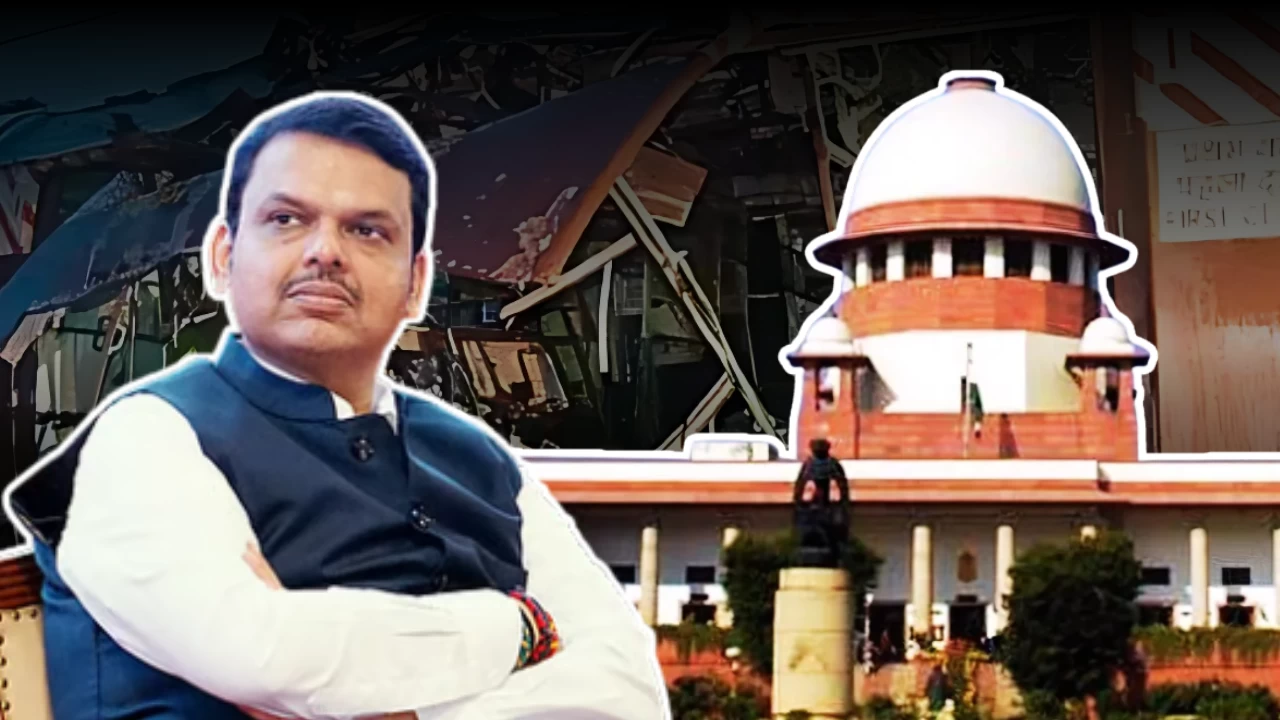
A day after the Bombay High Court acquitted all 12 men convicted in the 2006 Mumbai train bombings; the Maharashtra government on Tuesday approached the Supreme Court, seeking an urgent stay on the acquittals and a swift hearing of its appeal.
Solicitor General Tushar Mehta, representing the state, mentioned the matter before Chief Justice of India Bhushan R Gavai. The CJI agreed to list the matter for hearing on 24 July, while noting, “But we have been reading that some of them have already been released from jail.”
In response, Mehta acknowledged the release but emphasised the state’s urgency. “The state still wants the appeal to be heard expeditiously,” he said. A special leave petition challenging the High Court’s verdict was filed earlier the same day.
The High Court verdict has triggered strong political reactions, particularly from Maharashtra Chief Minister Devendra Fadnavis, who called the ruling “shocking”.
“I will go through the entire High Court order. I have discussed with the lawyers, and the High Court verdict will be challenged in the Supreme Court,” Fadnavis told reporters on Monday.
The state government’s appeal argues that the High Court erred in overturning the 2015 convictions delivered by a special MCOCA court. It is seeking a stay to prevent further releases of the accused, most of whom had already spent 17 years behind bars.
The Bombay High Court on Monday delivered an assessment of the state’s investigation and prosecution in the 2006 blasts case. In a comprehensive 400-page ruling, Justices Anil S Kilor and Shyam Chandak said the prosecution “utterly failed to establish the offence beyond reasonable doubt”.
The bench described the case as a “deceptive closure” that undermined the justice system and allowed the actual perpetrators to escape. The court particularly criticised the investigation led by the Maharashtra Anti-Terrorism Squad (ATS), calling it marred by procedural lapses, unreliable evidence, and violations of constitutional rights.
The court noted that confessional statements from the accused, a key pillar of the prosecution’s case, appeared to be “cut-copy-paste” versions, with multiple accused giving strikingly similar accounts. Many of these confessions were later retracted, with the accused alleging custodial torture, claims the court found credible given the procedural violations.
One critical issue was the denial of legal counsel to the accused before their confessions were recorded. Despite being represented by lawyers, the accused were not informed of their right to consult them, a breach of fundamental rights, the court held.
The credibility of eyewitnesses was also questioned. Testimonies from two taxi drivers and some train passengers were found unreliable, as they were recorded over 100 days after the blasts and were inconsistent during later identification parades. The parades themselves were conducted by unauthorised officers, further invalidating the process.
Moreover, physical evidence, such as RDX, pressure cookers, soldering guns, and maps, was declared inadmissible. The court found that the chain of custody had been broken, and that forensic procedures had not been followed correctly.
The coordinated serial blasts occurred on 11 July 2006, when seven powerful bombs, concealed in pressure cookers, exploded within a span of six minutes aboard Mumbai’s suburban trains during peak evening hours.
The attacks, which hit first-class compartments on the Western Railway line, killed 188 people and injured over 800, marking one of the deadliest terror strikes in India’s history.
Within four months, the Maharashtra ATS arrested 13 men, alleging they were linked to the banned Students’ Islamic Movement of India (SIMI) and supported by Pakistan-based Lashkar-e-Taiba (LeT). The ATS also claimed that 12 Pakistani nationals had infiltrated India to train and assist in the attacks, but these allegations later failed to withstand judicial scrutiny.
In 2015, a special court under the Maharashtra Control of Organised Crime Act (MCOCA) convicted 12 of the 13 accused. Five were sentenced to death, while seven received life imprisonment. One man, Abdul Wahid Shaikh, was acquitted. Another accused, Kamal Ansari, died during the appeals process in 2021.