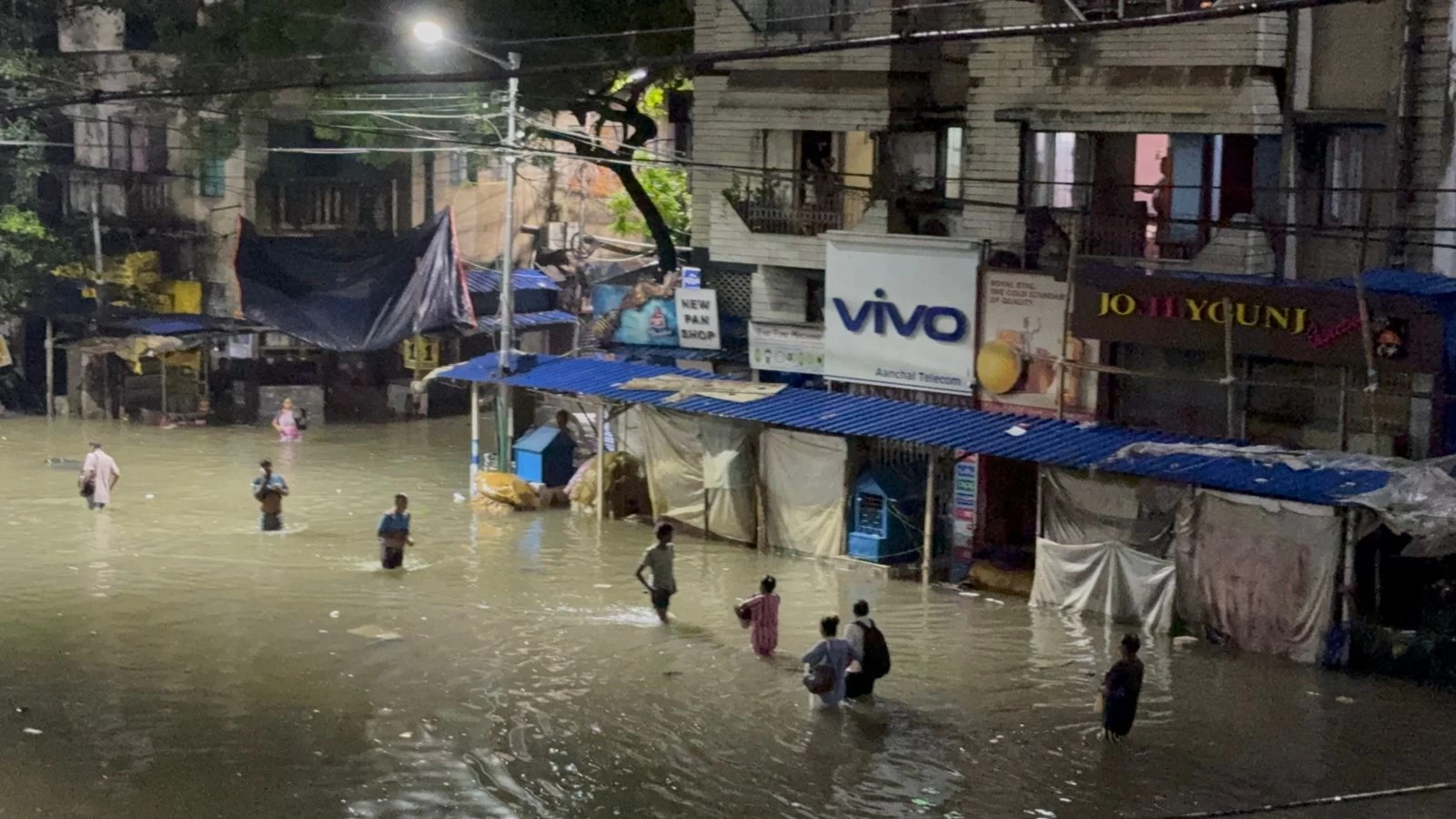
In a testament to the resilience of its people and the tireless efforts of civic authorities, Kolkata is steadily shaking off the scars of a once-in-a-three decade downpour that turned streets into rivers just 24 hours ago. What began as a routine Monday evening devolved into chaos as unprecedented rainfall battered the city for six gruelling hours, from late September 22 into the early hours of September 23, flooding neighbourhoods and paralysing daily life.
The deluge, triggered by a sudden cloudburst, dumped over 250 millimetres of rain in that brief window - more than the city's average monthly September quota, according to preliminary data from the India Meteorological Department. Some areas like Garia received over 330 mm of rainfall in just 7 hours, followed by Kalighat that received over 280mm of rainfall. The downpour had led to flooding, as people who were sleeping in middle of the night, were mostly caught off guard. One of the worst affected places have been the upscale Ballygunj and inundation reached the doors of every house, almost. Similarly in Garia and Patuli, no house or residential complexes were spare.
“It was around 4am in the morning when I woke up and found the entire house flooded. Everything in the house is damaged”, said Deepa Ghosh from Panchashyar area in new Garia. Business areas like Gariahat and Central Kolkata had been equally hit with water sipping inside restaurants and shops. Low-lying areas across the metropolis, particularly in the south and east, bore the brunt, with chest-deep water submerging homes, roads, and markets.
Kolkata Municipal Corporation (KMC) swung into action, deploying over 500 pumps and teams of workers in a round-the-clock operation to reclaim the streets. "Our engineers and sanitation crews worked through the night, battling waist-high waters to restore normalcy," said KMC Mayor Firhad Hakim in a midday briefing. By Wednesday morning, the fruits of their labor were evident: major thoroughfares like Park Street, Esplanade, and the bustling Howrah Bridge approaches had been cleared, allowing traffic to flow with only minor snarls.
Business hubs, the lifeblood of this vibrant metropolis, have largely rebounded. Shopkeepers in New Market and Sector V IT parks wiped down storefronts and reopened doors, with footfall picking up by mid-morning. "We lost a night's business, but seeing the water gone feels like a fresh start," remarked Rajesh Gupta, a cloth merchant on Lindsay Street. Commuters, though cautious, returned to buses and metros, though the Eastern Railway reported lingering delays on suburban lines due to track inundation.
Yet, the recovery is uneven. Southern suburbs like Joka, Tollygunge, and parts of Jadavpur remain partially submerged, with residents wading through knee-deep slush to access essentials. "The pumps are here, but the drainage system just couldn't keep up," said local resident Anjali Das, a schoolteacher whose home in Regent Estate still lacks electricity. The KMC has promised additional high-capacity machines for these holdouts, with Hakim estimating full clearance by Thursday evening.
West Bengal Chief Minister Mamata Banerjee urged calm and unity in the face of nature's fury. "Kolkata has faced storms before and emerged stronger each time. Our people are our greatest asset and together, we'll drain every drop and rebuild brighter. I assure you, no family will be left behind," Banerjee said. While she confirmed 8 deaths due to electrocution in the city, she also assured financial help of Rs 2 lakh to each of the bereaved families, along with a government job. “CESC can not shrug off its responsibility. I have asked them to pay another Rs 5 lakh to the families of the deceased. We were able to clear out 70 percent of the areas within 7 hours. Rest will be done soon”, she added, while urging people not to play politics at this hour of crisis.
Meteorologists attribute the freak weather to a rare convergence of a depression over the Bay of Bengal and shifting monsoon patterns, exacerbated by climate change. While the IMD has lifted its red alert, yellow warnings for isolated showers persist through the weekend, prompting authorities to fast-track infrastructure upgrades. Long-term plans include expanding the city's aging stormwater network, a project Banerjee's government has prioritised since last year's cyclones.
As the sun sets on a city still glistening with puddles but pulsing with renewed energy, Kolkata's indomitable spirit shines through. From ‘chaiwallahs’ brewing under makeshift awnings to office-goers dodging last-minute splashes, life here refuses to stay submerged. The cloudburst may have tested the limits of this 350-year-old urban giant, but as always, it adapts and thrives. “We have work to do and rains can not stop us”, said Nandini Lahiri, a staff nurse at a government hospital who waded through waist deep water in Patuli to reach to work. This cloudburst, 5 days ahead of Durga Puja - the biggest festival in Bengal, has dampened the business for a day but the city promises to bounce back, hoping the worst is over.