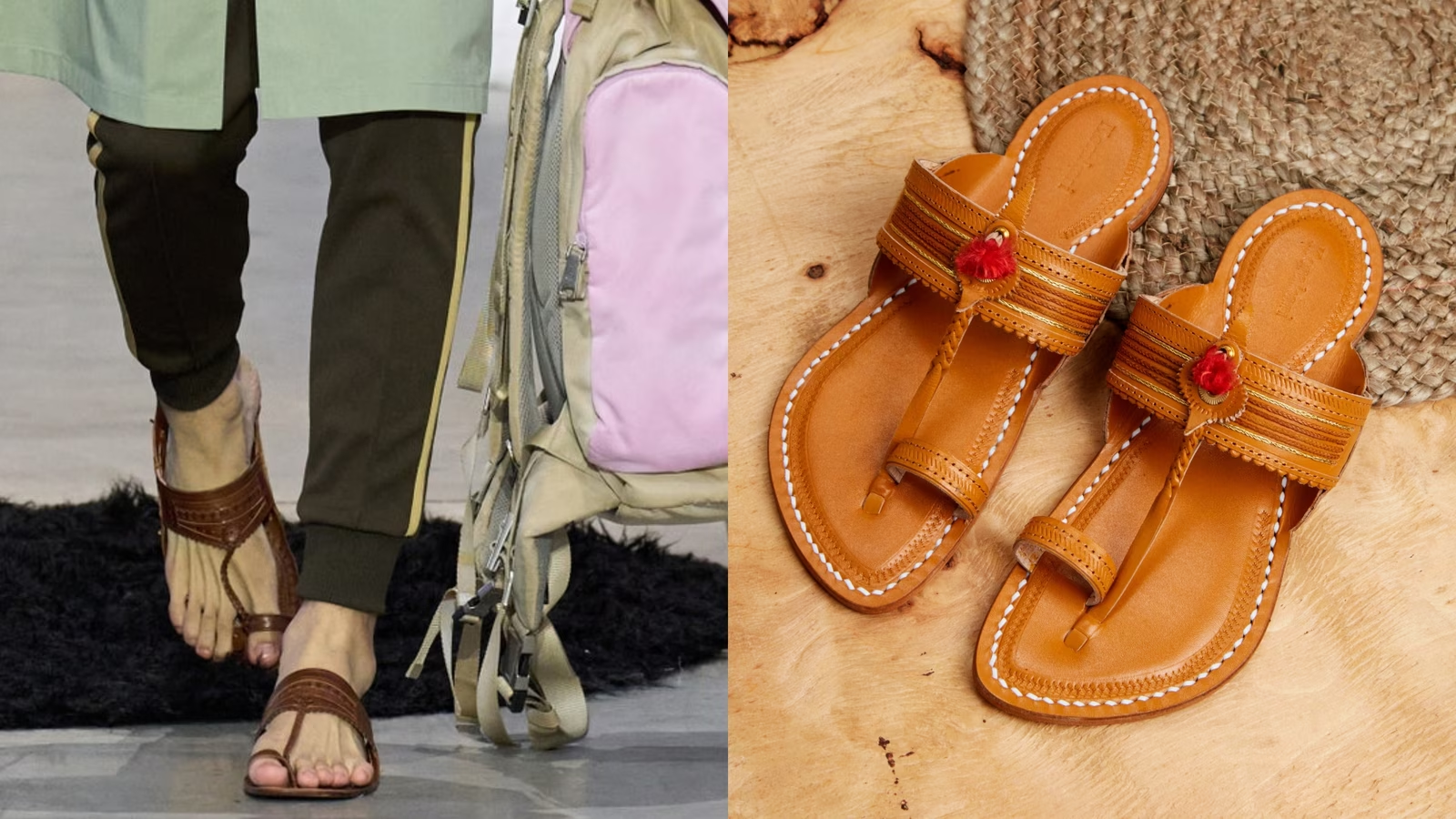
The controversy surrounding Italian fashion giant Prada’s latest footwear line has intensified, as a Public Interest Litigation (PIL) was filed in the Bombay High Court, accusing the luxury brand of copying the iconic Kolhapuri chappal design without appropriate credit or compensation to Indian artisans.
The PIL has been filed by Ganesh Hingmire, an intellectual property rights advocate, who has demanded monetary compensation for the artisans responsible for the traditional design. Hingmire has also called for a formal apology from Prada, alleging that the company’s recent statement acknowledging Indian influence was insufficient and only made following public backlash.
“The Kolhapuri chappal is a cultural symbol of Maharashtra and holds significant emotional and social value,” the petition states. “The brand has privately accepted that its collection is ‘inspired by Indian artisans’; however, this acknowledgment surfaced only after facing widespread backlash on social media. It was not made publicly, nor was it addressed to the artisans, GI Registry, or the Indian government,” the petition further reads.
Hingmire’s petition goes further, urging the court to mandate a supervised collaboration between Prada and local artisan groups. He proposed initiatives such as co-branding, capacity-building programmes, and revenue-sharing models to ensure that traditional craftsmen benefit from global exposure.
“The brand has not yet issued any formal apology or offered damages, compensation, or any entitled remedy,” Hingmire added. “Their statement appears to be a superficial attempt to deflect criticism.”
He also argued that expecting fragmented artisan communities to file individual legal claims against multinational corporations was both unrealistic and unfair. “A legal order in this case would send a strong message and help protect Indian GI products from unauthorised use by international fashion houses,” he said.
The PIL references a report by NDTV, highlighting author Shobhaa De’s criticism of Prada's alleged imitation of the Kolhapuri design. The row follows the brand’s showcasing of leather flat sandals at the Milan Fashion Week, reportedly priced at ₹1.2 lakh. The sandals bear a striking resemblance to traditional Kolhapuri chappals, which were granted Geographical Indication (GI) status in 2019 due to their unique cultural and regional significance.
Prada’s move has sparked accusations of cultural appropriation and intellectual property violation, although legal experts remain divided on the viability of an infringement case.
“Prada maintains that these are simply flat sandals and that there is no element of misrepresentation,” said senior lawyer Ameet Naik. “A passing-off claim might be pursued, but it wouldn’t be a particularly strong case. That said, Prada could have avoided this controversy altogether by clearly crediting Indian craftsmanship.”
The petition also points to a growing pattern of Western luxury brands using Indian design elements without credit. French label Dior has recently come under fire for displaying a handcrafted coat in Paris featuring mukaish work, a traditional embroidery technique from Lucknow—without acknowledging the artisans behind it.
The issue has drawn strong responses from political leaders and industry figures. Karnataka Minister Priyank Kharge voiced his support for the artisans behind Kolhapuri chappals, calling for systemic recognition and support for their craft. “Many of these artisans are based in Karnataka’s Athani, Nippani, Chikkodi, Raibag, and parts of Belagavi, Bagalkot, and Dharwad. They’ve been making these chappals for generations,” Kharge said. “Prada is essentially selling Kolhapuris for ₹1.2 lakh a pair while the actual artisans struggle for visibility and fair compensation.”
He emphasised the need to invest in skilling, branding, design innovation, and global marketing opportunities for these traditional craftsmen. “When international fashion houses adopt our designs, it is our artisans’ names, work, and legacy that must be showcased—not sidelined,” Kharge stated.
“They deserve not just credit but better prices, wider exposure, and dignified livelihoods.”