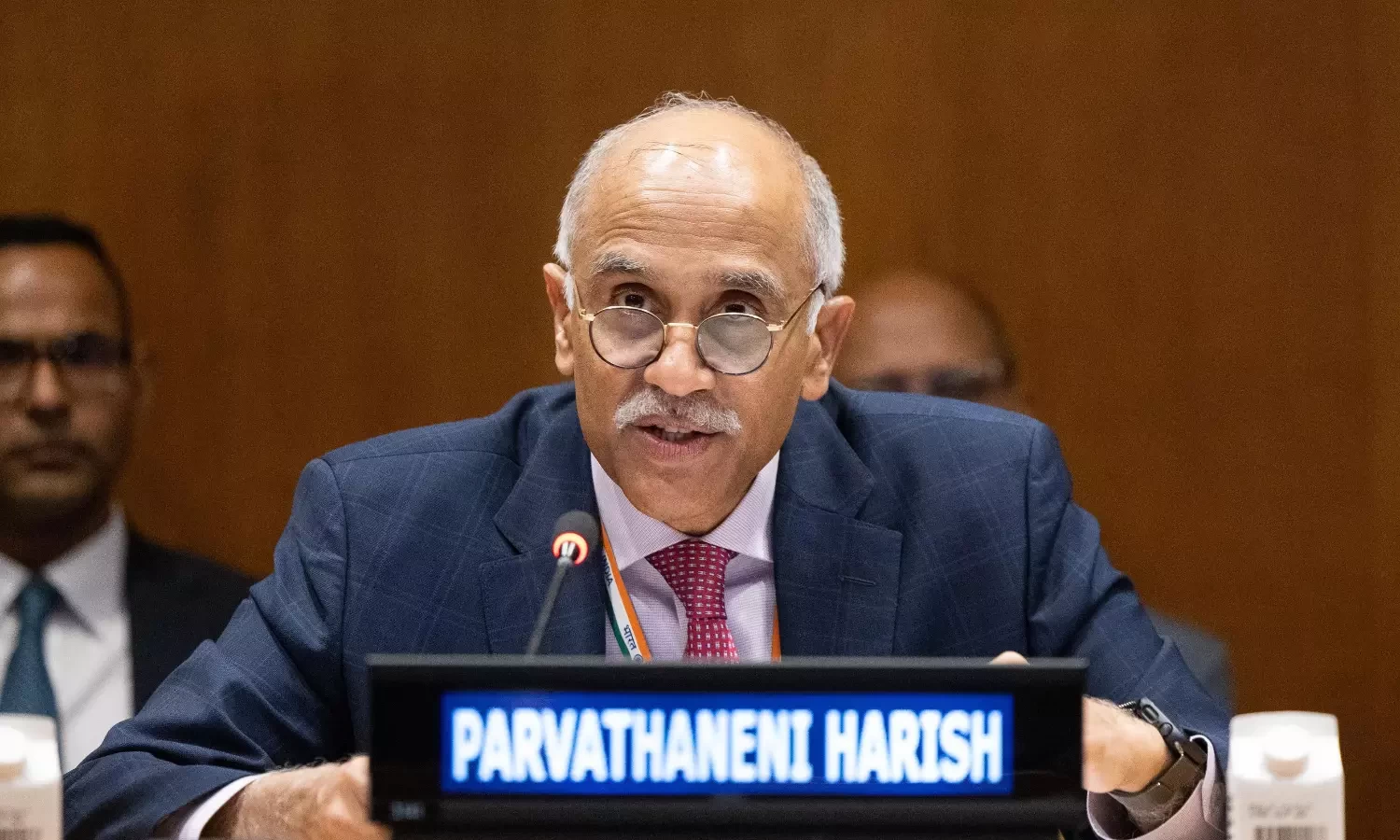
India’s Permanent Representative to the United Nations, Parvathaneni Harish, on Tuesday firmly rebutted Pakistan’s account of Operation Sindoor, calling it a “false and self-serving” narrative and asserting that Pakistan had itself sought a cessation of military action. His remarks were made during a session at the United Nations, where Pakistan raised the issue while addressing the forum.
Responding to Pakistan’s statements, Harish said the narrative presented by Islamabad was detached from facts and intended to mislead the international community. He stated that Pakistan’s representative had once again attempted to divert attention from the country’s long-standing role in sponsoring cross-border terrorism by distorting the sequence of events surrounding the military operation.
"The facts on this matter are clear. Pakistan-sponsored terrorists killed 26 innocent civilians in a brutal attack in Pahalagam in April 2025. This august body itself called for holding the perpetrators, organisers, financiers and sponsors of this reprehensible act of terrorism accountable and bringing them to justice. That is exactly what we did. India's actions were measured, non-escalatory, and responsible and focused on dismantling the terrorist infrastructure and disabling terrorists," Harish said.
"Till May 9, Pakistan was threatening more attacks on India. But on May 10, the Pakistani military called our military directly and pleaded for a cessation to the fighting," he added.
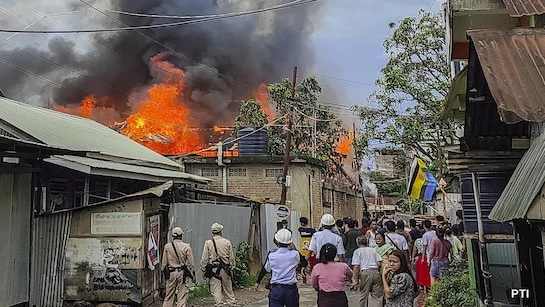
Operation Sindoor was launched by India on May 7, 2025, following the April 22 terrorist attack in Pahalgam, Jammu and Kashmir, in which 26 civilians were killed. Indian authorities have consistently maintained that the operation was aimed at terror infrastructure operating across the Line of Control and in Pakistan-controlled territory. According to India, the strikes were carefully calibrated and focused on dismantling facilities linked to militant groups responsible for attacks on Indian soil.
Addressing the United Nations, Harish stated that contrary to Pakistan’s claims, it was the Pakistani military leadership that approached India seeking a halt in hostilities. He said this outreach occurred after Indian military action had inflicted significant damage, prompting Pakistan to request a ceasefire. India, he added, agreed to the cessation in the interest of regional stability.
Harish criticised Pakistan for what he described as a pattern of using international platforms to advance misleading narratives while failing to address the core issue of terrorism emanating from its territory. He said Pakistan had no credibility to lecture others on peace and security while continuing to provide space and support to extremist groups.
The Indian envoy also rejected Pakistan’s repeated references to Jammu and Kashmir, reiterating that the region is an integral part of India and that Pakistan has no locus standi to comment on India’s internal affairs. He said attempts to internationalise the issue or misrepresent facts at the UN would not alter this position.
While avoiding operational details, Harish pointed out that the outcomes of the military engagement were evident and contradicted Pakistan’s portrayal of events. He emphasised that India’s actions were defensive, proportionate, and aimed solely at countering terrorism.
Pakistan, in its earlier remarks, had sought to present Operation Sindoor as an act of aggression and claimed it played a decisive role in bringing hostilities to an end. India, however, has categorically denied this version, maintaining that Pakistan’s request for cessation followed Indian military pressure. India’s intervention at the UN underscored its broader diplomatic stance that terrorism remains the central challenge to peace in South Asia. Harish concluded by urging the international community to remain vigilant against attempts to distort facts and to hold states accountable for supporting terror networks.