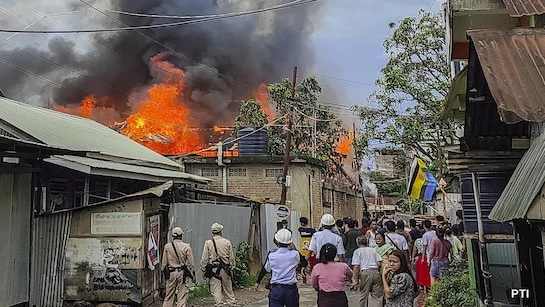
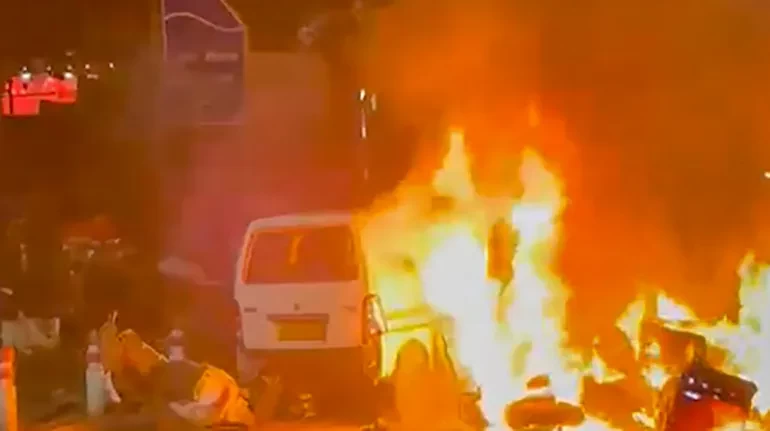
A massive explosion outside the Red Fort on Monday evening left 12 people dead and several others critically injured. The blast, which occurred in a moving car, marks India’s first such terror attack involving an explosive device detonated inside a running vehicle. The incident took place during peak traffic hours when the Red Fort area was crowded with office commuters and tourists, causing chaos and panic across central Delhi.
The Timeline of the Red Fort Blast Case
November 1, Suspicious Posters in Kashmir
The chain of events began on November 1, when posters of Jaish-e-Mohammad (JeM) were spotted on walls across parts of the Kashmir Valley. Police investigations into these posters led them to a man identified as Dr. Muzammil Shakil.
November 6, Arrest in Saharanpur
Five days later, on November 6, a team from Jammu and Kashmir Police reached Saharanpur in Uttar Pradesh and arrested Dr. Adil Ahmed, who was later found to have known Muzammil.
Investigations Reveal a Web of Links
As the probe deepened, investigators learned that Muzammil was a student of Al Falah University and was staying at a rented accommodation in Faridabad.
November 9, Explosives Found in Faridabad
Acting on leads, a J&K Police team raided Muzammil’s Faridabad residence on November 9. The search led to the recovery of 350 kilograms of explosives, detonators, and batteries. An assault rifle was also found inside a car registered to Dr. Shaheena, believed to be Muzammil’s associate.
A Shocking Discovery in Taga Village
During the same operation, police raided a house in Taga village, about four kilometers from Faridabad, where they recovered 2,500 kilograms of ammonium nitrate from the residence of a local cleric (maulana). The cleric’s interrogation revealed another key name, Dr. Mohammad Umar Nadeem and pointed to a systematic effort to radicalize young men.
Emergence of the ‘Faridabad Module’
Investigators then uncovered that JeM had created a new network, referred to internally as the ‘Faridabad Module’, led by educated recruits including doctors and engineers.
November 10 The Day of the Blast
At 8:13 a.m., CCTV footage from Badarpur Toll Plaza, on the Delhi-Faridabad border, captured a white Hyundai i20 car (HR 26 CE 7674) entering the capital. The driver, believed to be Dr. Umar, had his face concealed.
Nearly seven hours later, at 3:19 p.m., the same car was seen entering the parking area near the Sunehri Masjid beside Red Fort. The suspect remained seated in the vehicle for nearly three hours.
At 6:23 p.m., the car exited the parking area, circled the vicinity for about 15 minutes, and at 6:38 p.m., a powerful
explosion ripped through the area, the car bursting into flames near the Red Fort gates.
Unanswered Questions and Theories
Authorities are now probing how a vehicle laden with explosives moved freely through Delhi’s streets for over ten hours.
Several theories have emerged
· The suspect may have realized his associates were arrested and panicked, attempting to destroy evidence or attract attention.
· The attack might have been planned for maximum international visibility, targeting Delhi’s most iconic landmark.
· It is also suspected that the bomber lingered near the Red Fort, waiting for a message from his handler, a signal that eventually triggered the deadly explosion.
· Some investigators believe the blast occurred accidentally amid heavy traffic before reaching the intended target.
· The Red Fort blast has exposed what investigators call one of Jaish-e-Mohammad’s most sophisticated terror modules, the doctor-led Faridabad network.