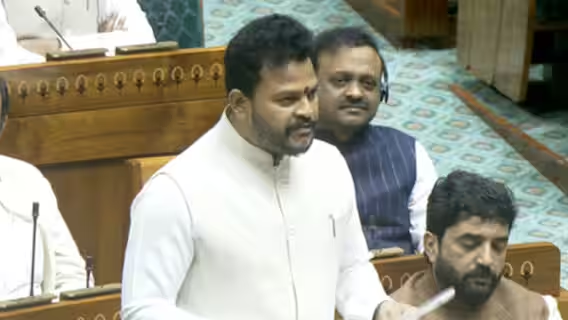
Aviation Minister Ram Mohan Naidu on Tuesday told the Lok Sabha that IndiGo’s nationwide disruption, which upended travel plans for thousands of passengers last week, is now steadily subsiding, with the airline’s operations “almost back to normal”.
Addressing the Lower House, Naidu said IndiGo’s schedule, which had dipped to 706 flights on 5 December, had climbed back to over 1,800 flights by Sunday, and was expected to stabilise further in the coming days. Other airlines, he noted, were operating smoothly, and airports were no longer reporting crowding or distressed passengers.
The minister said the government had been monitoring refunds, baggage delays and passenger assistance “round the clock”, while underlining that accountability for the disruption would be firmly fixed. The Directorate General of Civil Aviation (DGCA) has already issued show-cause notices to IndiGo’s senior leadership and initiated an enforcement inquiry. “Depending on the findings, strict action under aircraft rules will be taken. No airline, however big, can be allowed to put passengers through such hardship,” Naidu said.
Reiterating that passenger safety remains the government’s “non-negotiable priority”, the minister said India, as a founding member of ICAO, adheres to the highest global aviation standards. He also referred to the revised Flight Duty Time Limitations being gradually implemented until 2025 to address pilot fatigue.
Naidu said IndiGo had earlier assured authorities that it was fully prepared for the winter schedule and compliant with safety norms. However, preliminary assessments indicate that the crisis stemmed from internal operational lapses, leading to widespread cancellations and severe inconvenience to passengers. The DGCA has since issued enquiry orders and notices to IndiGo’s CEO and COO, directing them to strengthen crew availability, reorganise operations, and restore the full schedule without delay.
The minister added that ground-level oversight had been intensified, and that every decision taken during the crisis was aimed at safeguarding passenger interest. Airfares were capped to prevent sudden spikes, and IndiGo has so far refunded over ₹750 crore to affected passengers. Rebookings, he said, were carried out without additional charges.
The ministry also monitored the baggage backlog. Naidu said IndiGo had nearly completed baggage tracing and compensation, while a 24×7 control room continued to support passengers in need of assistance.
Looking ahead, the minister said the government was working towards a more competitive aviation landscape with policies that encourage new airlines, ensure fair access to airport slots, and prevent monopolistic control over routes or pricing. “More airlines mean more choice, affordability and resilience,” he said.
He also highlighted India’s rapid aviation growth, around 12% annual domestic passenger expansion over the past decade, which has positioned the country as the world’s third-largest aviation market. The government, he stressed, aims to ensure this growth remains sustainable.
“Operations are stabilising fast, safety enforcement is uncompromised, IndiGo is being held accountable, and passengers’ dignity and convenience are being protected,” Naidu added.