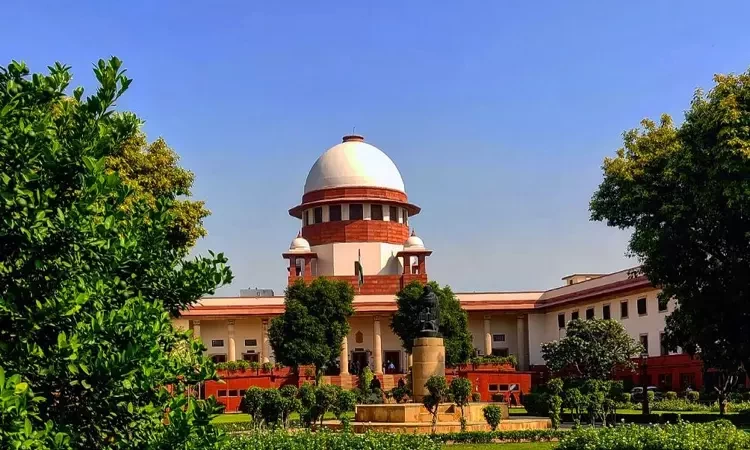
The Supreme Court on Friday issued a sharp warning to the Centre, stating that undertrials charged by the National Investigation Agency (NIA) may be released on bail if special courts equipped with proper infrastructure are not established to ensure speedy trials.
A bench comprising Justices Surya Kant and Joymalya Bagchi questioned how long undertrials could be kept in custody without an adequate mechanism to conduct and conclude trials within a reasonable timeframe. "If the authorities fail to establish special courts with requisite infrastructure to conduct time-bound trials, the courts would invariably be without any option but to release undertrials on bail," the bench observed. "How long can such suspects be kept behind bars when there is no mechanism for speedy trial?"
The remarks came during the hearing of a bail plea filed by Kailash Ramachandani, an undertrial facing charges under the NIA Act. The court had earlier, on 23 May, asked the Centre to respond to concerns over the prolonged delay in trial proceedings under special laws.
The bench emphasised the need for dedicated courts to hear cases under legislations such as the Unlawful Activities (Prevention) Act (UAPA) and the Maharashtra Control of Organised Crime Act (MCOCA). It noted that trials under such serious statutes should ideally proceed on a day-to-day basis.
The Supreme Court made it clear that "if the Union of India and the respondent-state government fail to establish exclusive special courts, the prayer of the petitioner for release on bail shall be considered on merits on the next date." It added firmly, "This will be the last opportunity."
The apex court also reviewed an affidavit submitted by the Secretary of the NIA but criticised it for lacking any clear or practical steps towards ensuring expeditious trials. "You want prosecution under special Acts, and yet no speedy trial for the accused?" the bench questioned.
It further cautioned against burdening existing courts with special trials, as this would disrupt justice delivery for other litigants. "The designation of an existing court or entrustment of exclusive trials under the NIA Act to such designated courts would be at the cost of other court cases," the judges noted, highlighting the plight of "hundreds of undertrials languishing in jails, senior citizens, marginalised sections, and parties to marital disputes."
In addition, the Supreme Court underscored that the denial or prolonged delay in granting bail, particularly due to lack of trial infrastructure, may amount to a violation of fundamental rights. "The release or denial of bail is indirectly a breach of Article 21 of the Constitution," it said, referring to the right to life and personal liberty.