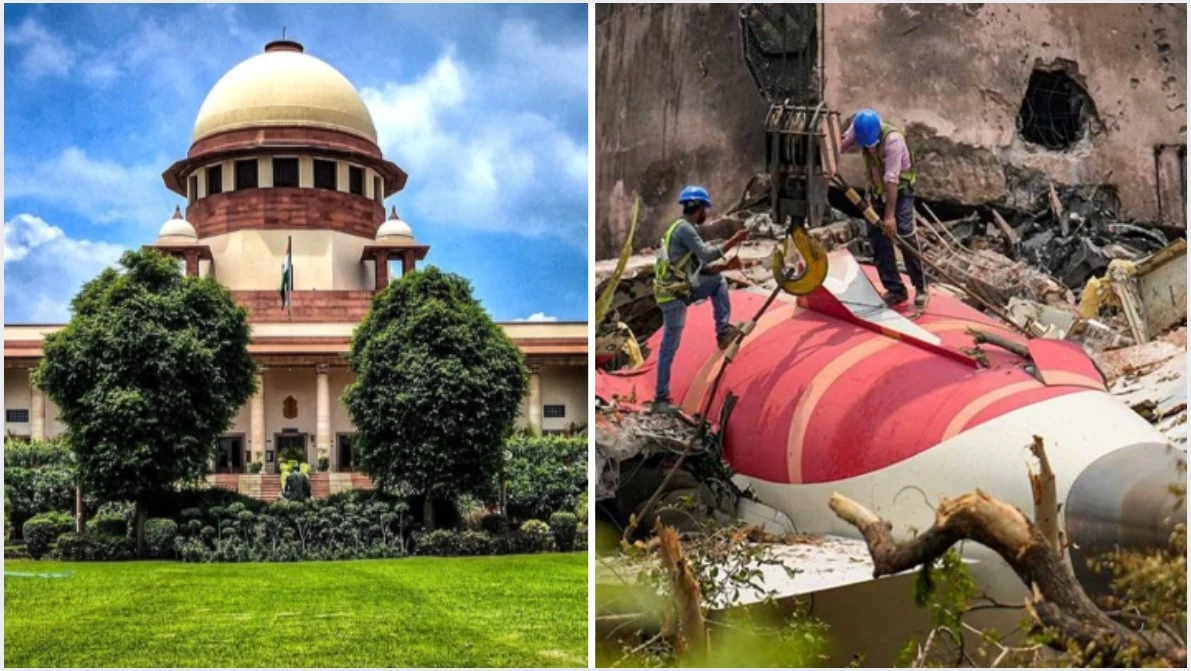
Supreme Court on Monday expressed dismay over the disclosure of sensitive cockpit exchanges in the preliminary investigation report into the tragic Air India Dreamliner disaster in Ahmedabad earlier this year. The case, initiated by the aviation safety advocacy group Safety Matters Foundation, challenges the government's handling of the inquiry into the June 12, 2025, crash that claimed more than 260 lives. The petition argues that selective revelations from the initial findings have fuelled rampant conjecture and eroded public trust in the process.
At the heart of the matter is the Aircraft Accident Investigation Bureau's (AAIB) interim document, released in mid-July, which included purported excerpts from the cockpit voice recorder capturing a tense exchange between the flight crew. Transcripts detailed one aviator questioning the sudden deactivation of fuel controls, prompting a defensive response from the co-pilot insisting they had not initiated the action. Such details, the litigants contend, were prematurely aired without the full context of technical logs, voice recordings with precise timings, or electronic fault diagnostics, contravening established protocols under the Aircraft (Investigation of Accidents and Incidents) Rules, 2017.
The bench, overseeing the matter under Article 32 of the Constitution, described the circulation of these pilot interactions as "unfortunate," underscoring the potential harm to the ongoing probe and the reputations involved. This comes as families of the deceased, including the relatives of lead pilot Captain Sumeet Sabharwal, push for a comprehensive review to exonerate their loved ones from implied fault. Sabharwal's father has invoked fundamental rights under Article 21, demanding safeguards against baseless inferences that tarnish the deceased's legacy.
The PIL further spotlights glaring gaps in the disclosed materials, notably the exclusion of statements from the crash's lone survivor, UK-based entrepreneur Vishwashkumar Ramesh, aged 40. Ramesh's account could shed crucial light on the sequence of events leading to the aircraft's rapid descent and impact just 32 seconds after liftoff, reportedly triggered by an “erroneous shift” in engine fuel settings from operational to shutdown mode.
Advocates for the petitioners decry the involvement of Directorate General of Civil Aviation (DGCA) personnel in the scrutiny, given the regulator's own lapses in prior oversight. They assert that opacity not only hampers accountability but also impinges on constitutional guarantees of equality, life, and expressive freedoms. "How can employees of the same organisation that is under question carry out the probe?" Senior Advocate Prashant Bhusan asked, appearing for the petitioners. Bhushan highlighted that more than 100 days have passed since the June 12 crash, but only a preliminary report has been released. "It doesn't say what may have happened and what precautions should be taken. The result is that all passengers who are travelling on these Boeing planes are at risk today," he added.
The AAIB has cautioned against hasty narratives in media circles, emphasising that definitive attributions await the exhaustive analysis. This incident marks one of the most devastating aerial mishaps in India's recent history, spurring parallel legal actions abroad, including suits against aircraft manufacturer Boeing. Several pilots and associations had questioned as how had the report landed in media studios before it could reach the stakeholders, prompting suggestions of any foul play in overzealously trying to blame the pilots.